Compare five hydraulic presses for jewelry and small metalworking shops: budget bench and floor presses, dedicated forming systems and deep-draw equipment.
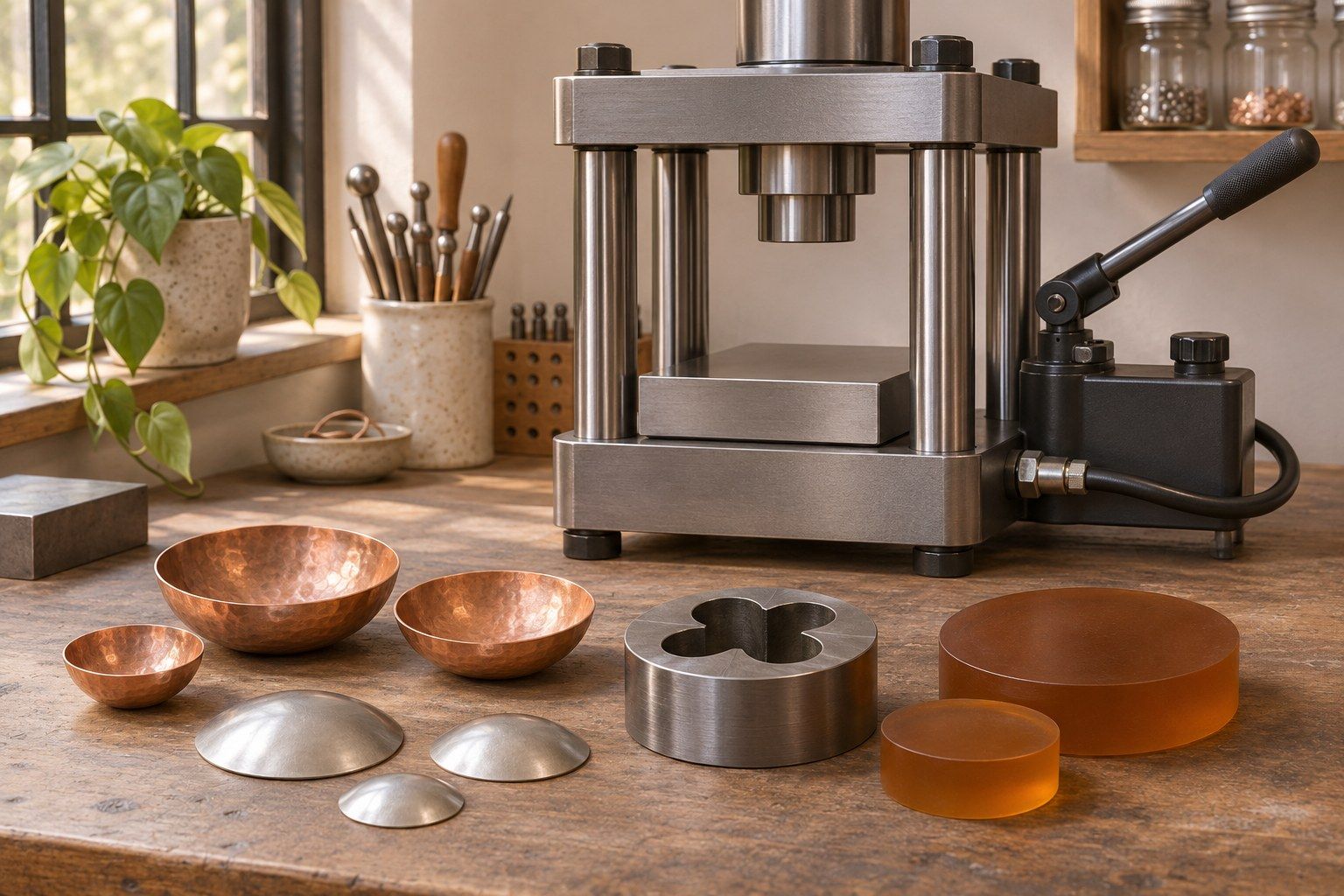
Conceptual editorial illustration; not a photograph of a recommended model.
Choose a jewelry hydraulic press around the tooling and shapes you want to make. Rated force alone does not tell you whether a bracelet former, large pancake die or deep-draw assembly will fit.
Quick answer
Which hydraulic press should a jewelry maker choose?
The Rincon Manual is the dedicated jewelry-forming starting point here, while its electric version suits repeated cycles. For a lower-cost general press, consider the Dragway six-ton benchtop model or VEVOR twelve-ton floor press only with a tooling setup approved for the job. The Bonny Doon Mark III Pro adds the vertical clearance needed for deep-draw development.
Five configurations for different jobs
Choose by the work you need to do
If you…
Choose
Why
Start with varied small forming jobs
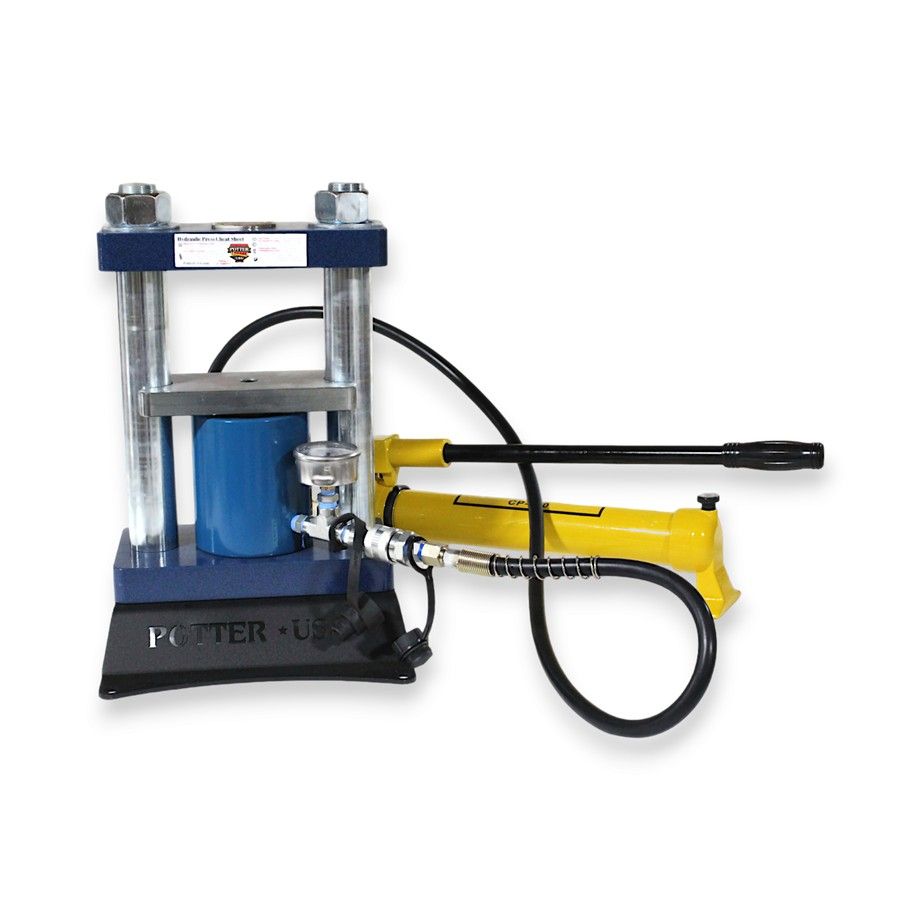
Rincon Manual
Hand pump and an electric upgrade path.
Repeat the same forming cycles regularly
Rincon Electric
Reduces hand pumping; needs more bench space.
Need a low-cost bench press for occasional small jobs
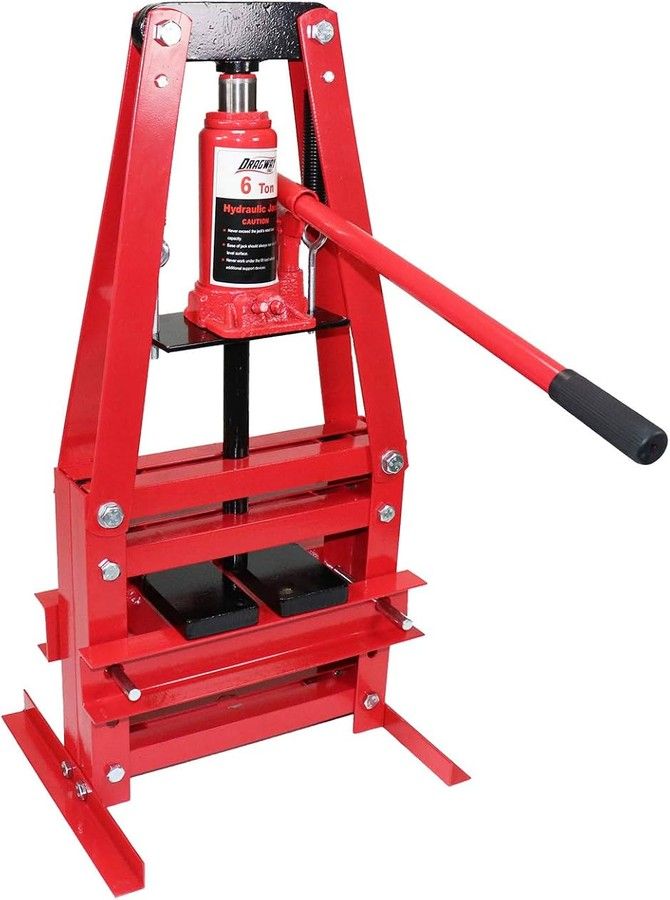
Its 6-inch-wide opening suits many small forming projects, but some extra-large pancake dies cannot fit. Measure your largest die before choosing it. The 2-inch cylinder stroke makes suitable spacers part of the working setup, rather than an optional convenience. The full pump-and-press arrangement needs more room than the frame alone.
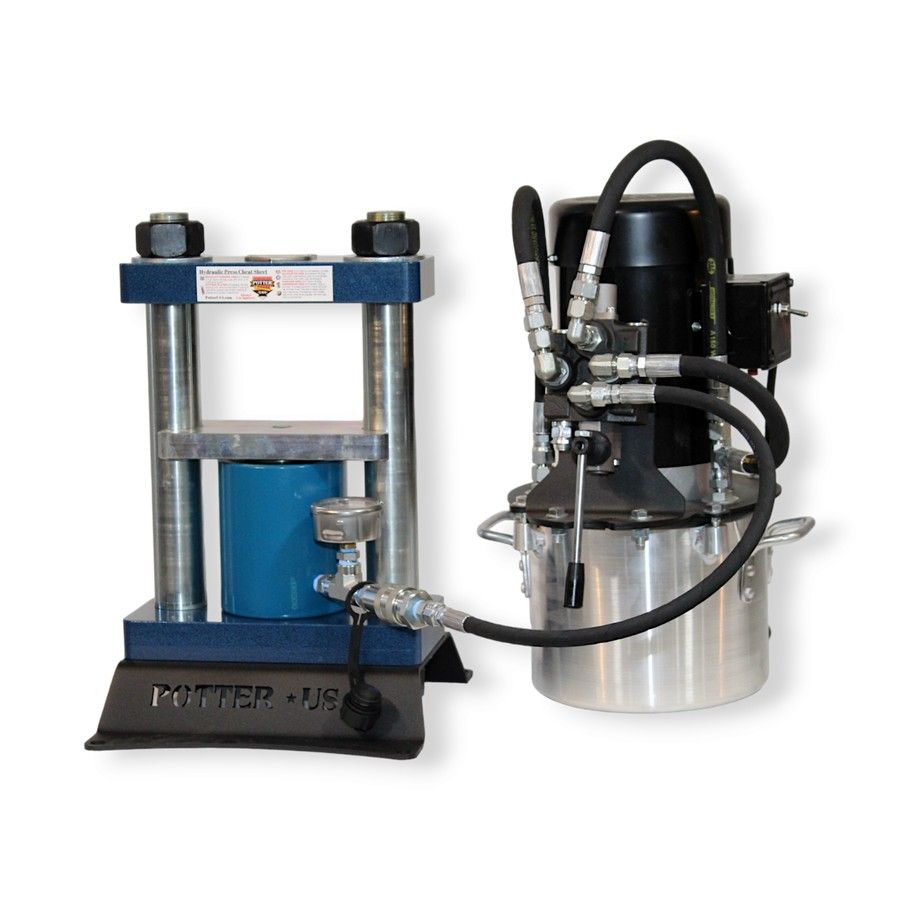
Repeated cycles: Rincon Electric
For frequent press cycles
Potter USA · RIN-ELEC
Potter USA Rincon Electric 20-Ton Press
Price tier: $$$Upper mid-range
An electric-pump configuration for reducing repeated hand pumping.
Best for: Studios where frequent press cycles justify dedicated pump space.
Specs, strengths and limitations
Rated force
20 tons
Pump type
Electric pump
Working clearance
4-11/16 in high × 6 in wide
Platen size
6 × 4 in
Cylinder stroke
2 in
Strengths
Reduces manual pumping during repeated cycles
Same compact forming area as the manual Rincon
Limitations
Pump adds substantial bench space and weight
Does not increase working clearance over the manual model
This is a workflow upgrade over the manual Rincon, with the same working clearance. Choose it when repeated pumping is the bottleneck; choose a taller press when tool-stack height is the problem. Plan the pump position and 110 V supply before reorganizing your bench. Follow the supplied instructions for oil and electrical setup.
Consider this for small bending or press-fit work when you have a suitable fixture and do not need a dedicated forming ecosystem. Its two-to-four-inch operating distance is restrictive: measure the whole tooling stack before buying. The five-inch cylinder stroke is a different specification and does not enlarge that operating clearance. Choose a dedicated jewelry press when you need supported forming accessories.
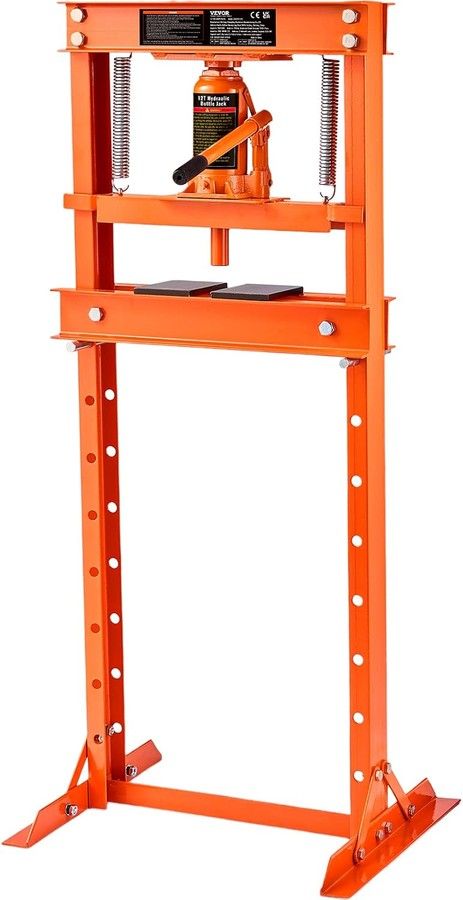
The adjustable bed makes this more useful for mixed workshop jobs than the compact benchtop option. It needs floor space and lacks a pressure gauge, so it is a poor substitute for a gauged jewelry system when a forming process needs repeatable pressure readings. Select the twelve-ton orange configuration explicitly; other capacities have different dimensions and features.
Deep drawing: Bonny Doon Mark III Pro Premium Electric kit
For deep-draw development
Bonny Doon · 110568
Bonny Doon Mark III Pro Premium Electric Deluxe Starter Kit
Price tier: $$$$Professional
Currently unavailable
An electric deep-draw press package with a removable riser and extensive forming accessories.
Best for: Committed studios developing deep-draw work.
Specs, strengths and limitations
Rated force
20 tons
Pump type
Premium electric pump
Working clearance
Up to 10 in vertical clearance with riser removed
Bench space
Press frame 17 × 8 in; allow separate pump space
Power supply
110 V, 7 A
Strengths
Removable riser adds 4 in of vertical space
Supports 3 in and 6 in deep-draw kits, purchased separately
Limitations
Much larger investment than a compact manual press
Included accessories do not include the deep-draw kits themselves
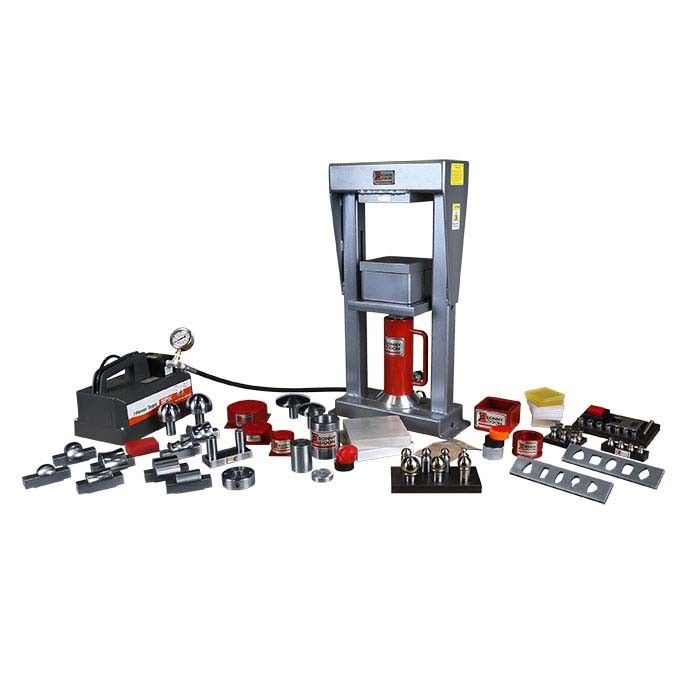
Removing the riser adds 4 inches of vertical clearance, giving up to 10 inches of working space. That is the reason to consider this much more expensive setup. The 3-inch and 6-inch deep-draw kits are separate purchases. Compare the included accessory list with your planned projects before paying for a broad starter package.
Check the complete tooling stack
Write down one real project before comparing presses: for example, a domed pendant in a silhouette die or a cuff formed around dedicated tooling. Ask the tooling maker to confirm the intended metal and thickness, required force, supporting plates, spacers and containment.
Measure the entire assembly at its starting height, then check the press opening and ram travel. Clearance and stroke are different measurements. A generous opening does not mean the ram can cross that distance safely without spacers. Also check attachment holes and tool holders; a shared nominal tonnage does not establish compatibility.
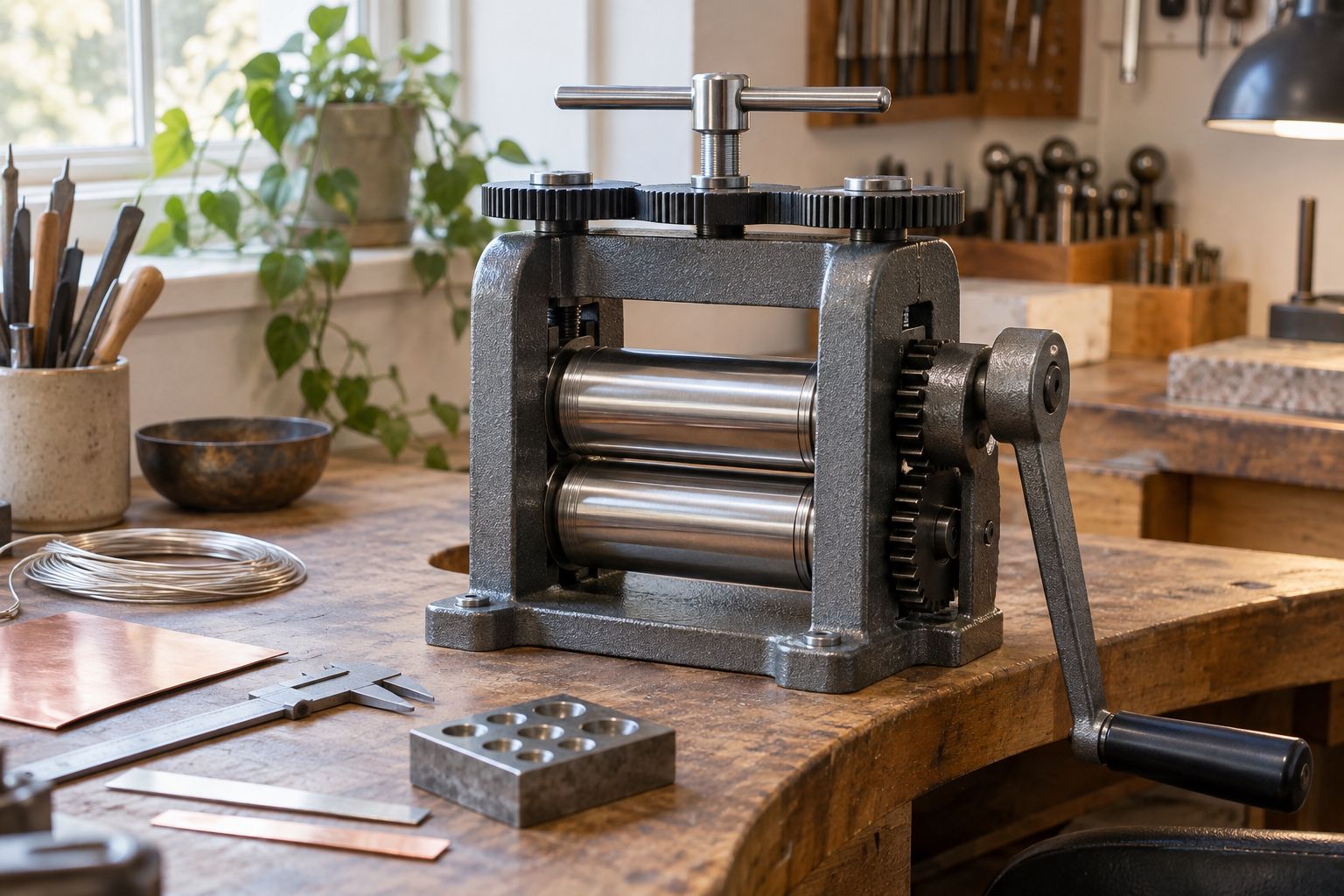
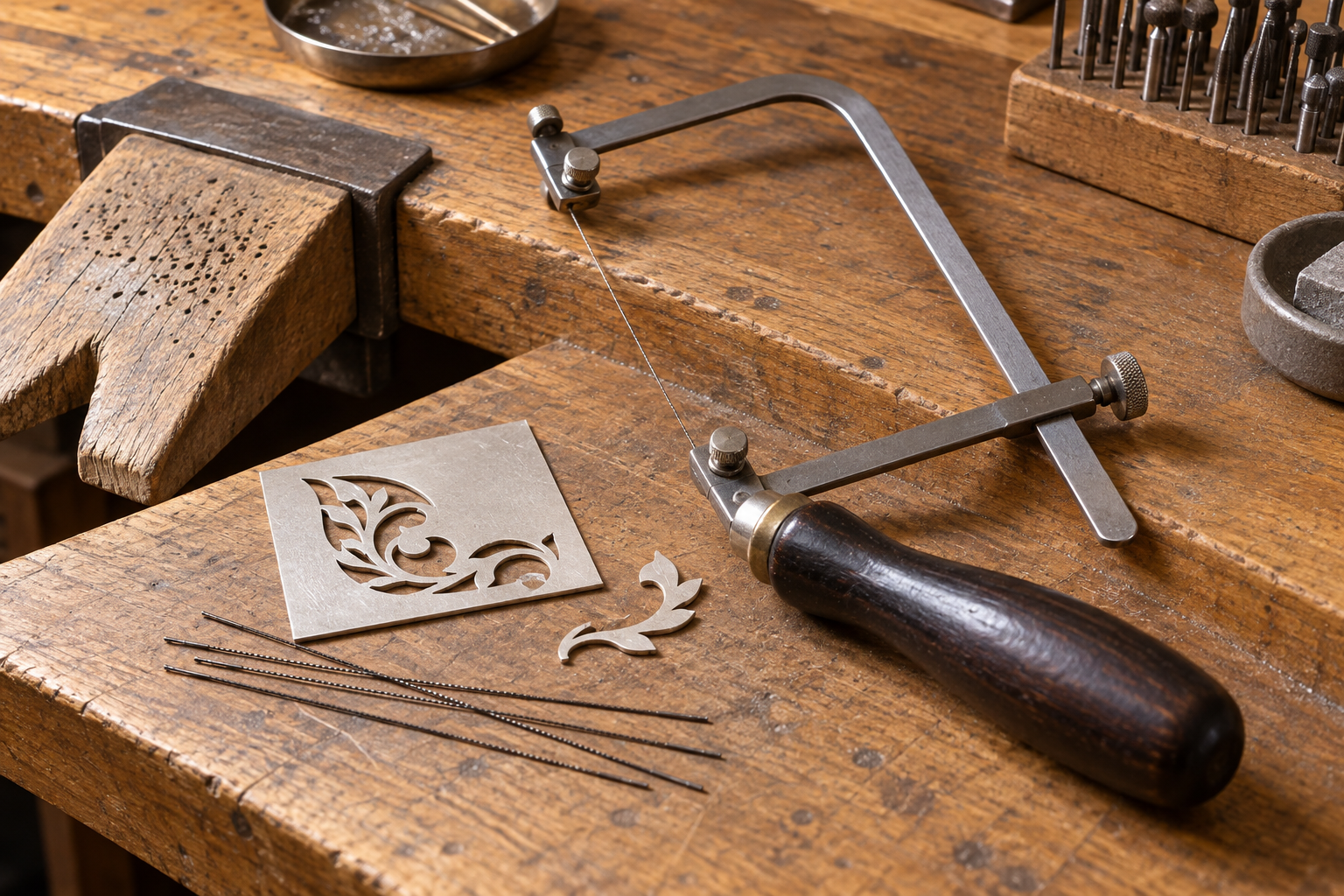
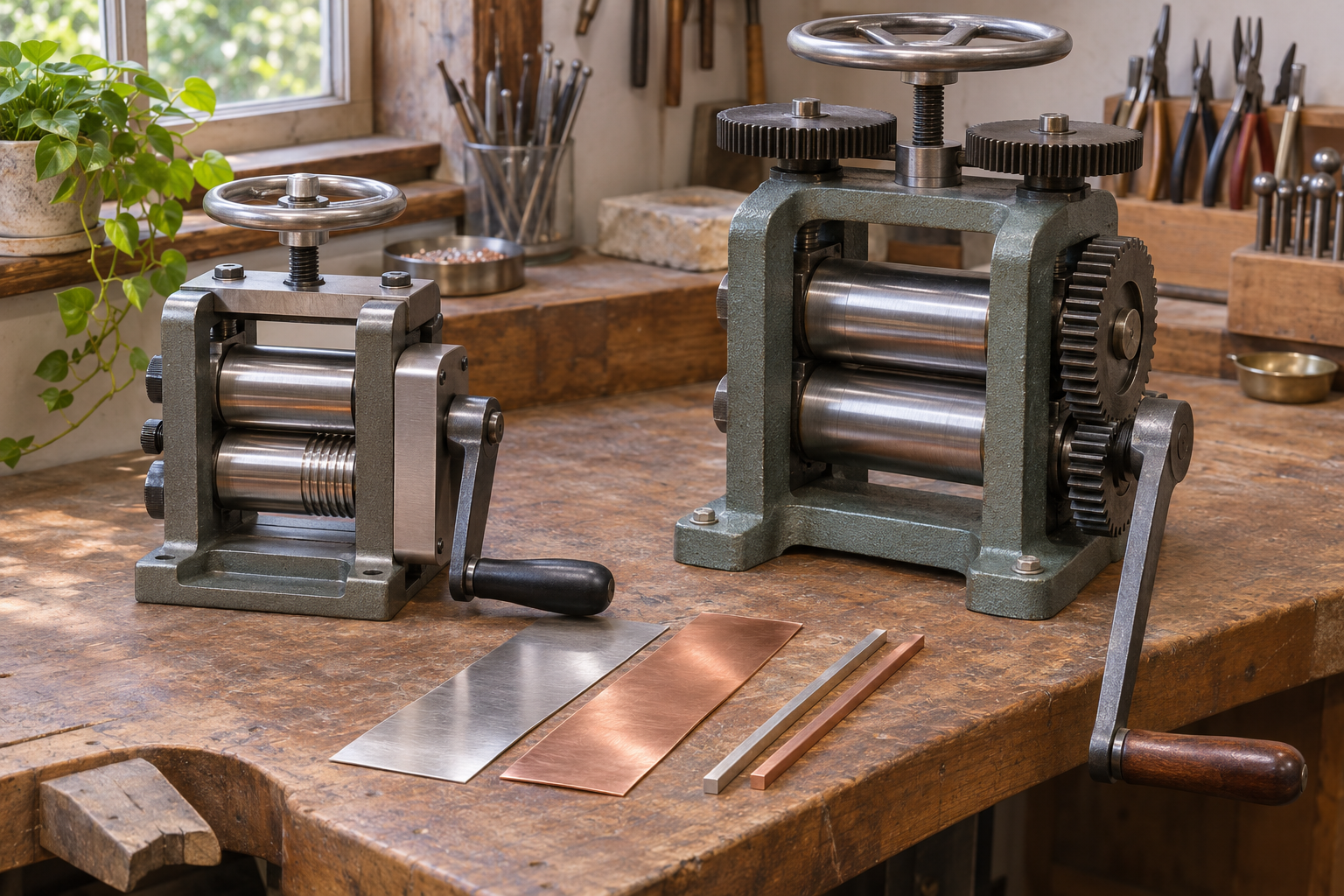
For flattening sheet or transferring a continuous surface pattern, compare your process with a rolling mill. For one-off outlines, a jeweler’s saw may avoid the need for dedicated blanking dies. The press makes more sense when its tooling solves a repeatable forming problem.
Budget for the working system
Tooling: dies, contained urethane, spacers, holders and protective plates can change the total substantially. Ask what is included for your first project.
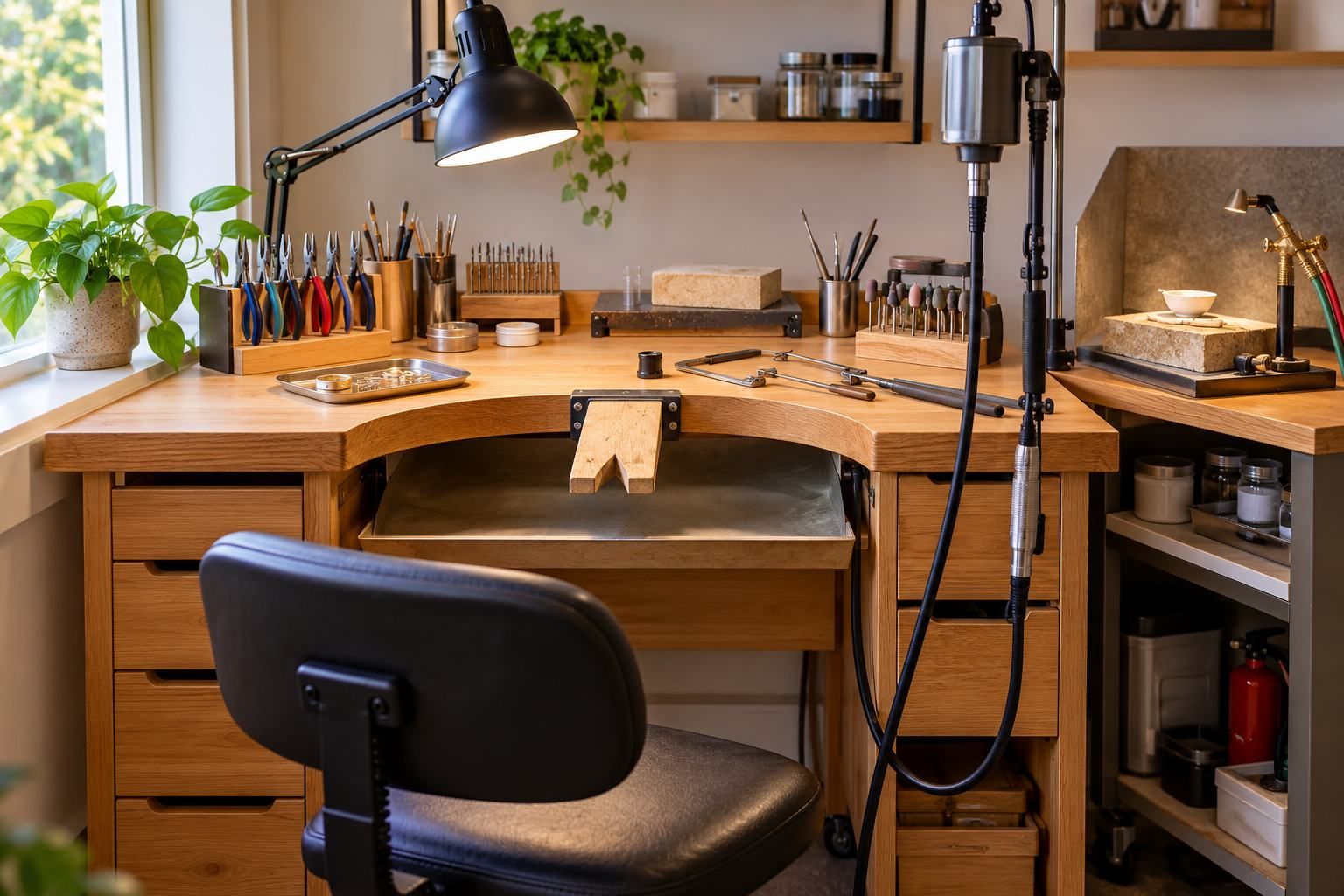
Workspace: allow for the pump, handle sweep, hoses and a clear operating position. A press-sized patch of bench is not enough; review your bench arrangement before delivery.
Delivery and lifting: confirm freight access, placement and a safe handling plan for each heavy component.
Support: check replacement seals, hoses, pump servicing and access to the current operating manual.
Setup checks before the first project
Read the manual for your exact press and pump. Inspect for damaged components, loose fasteners or hydraulic faults before use, and have problems corrected first. Follow the maker’s mounting requirements on a suitable workstation.
A pressure gauge helps you repeat a permitted setup, but its scale is not a universal force chart. Use the maker’s limits for the exact cylinder and tooling. Stop when something shifts, deforms unexpectedly or behaves abnormally; adding pressure is not a diagnosis.
Frequently asked questions
Is a 20-ton hydraulic press enough for jewelry making?
It is a common capacity among dedicated jewelry presses, but suitability depends on the die, material, thickness and forming operation. Follow the tooling maker's limits; never increase pressure simply because a shape has not fully formed.
Does an electric press have more force than a manual press?
Not necessarily. The two Rincon configurations here both have a 20-ton rating. Electric power changes how the pump is driven; it does not enlarge the working area or automatically increase the permitted load.
Can I fit any die into a jewelry hydraulic press?
No. Check the die's footprint, total tooling height, attachment system and permitted force. A die that fits between the columns may still be unsuitable for the press or operation.
Tools in this guide
Potter USA
Potter USA Rincon Manual 20-Ton Press
$$$Small studios doing varied forming work.
Potter USA
Potter USA Rincon Electric 20-Ton Press
$$$Studios where frequent press cycles justify dedicated pump space.
We have not personally used every product in this guide. Recommendations are based on specifications, manufacturer documentation, specialist references and owner experiences.
Specifications come from manufacturer documentation where it is available.
Specialist references, supplier catalogs and owner experiences are used to understand real-world strengths and weaknesses.
We do not claim physical testing, and we do not publish scores or star ratings.
Choose the right jewelry rolling mill by roller width, configuration, gearing and bench space, with a research-based look at budget and professional options.
Set up a jewelry bench at home with the right bench height, bench pin position, lighting, seating, tool layout, metal recovery, soldering zone and safety.
Compare jeweler's saw frames by throat depth, blade tension, clamps and grip, from a simple adjustable starter frame to a cam-lever saw for repeated piercing.