Durston’s range runs from small direct-drive combination mills to heavy geared machines with separate wire profiles. Choose by usable flat width, roller layout and how often you roll, then decide whether a lighter Agile frame or a DRM handwheel and extensions are worth the space and cost.
Quick answer
Which Durston rolling mill fits a jewelry bench?
The Agile C110 is the straightforward general-purpose choice for narrow sheet and square wire. Its 110 mm rolls leave only 50 mm of flat area, so makers of wider sheet should look at the Agile F130 or Agile Elite C140. Choose the DRM C130RE when a calibrated handwheel and side extension profiles matter; choose the Mini C80 for small work on a tighter bench.
Durston models at a glance
Match a Durston rolling mill to the work
Main need
Model
Why it fits
Small components and limited bench space
Mini C80
Compact 80 mm combination rolls; direct drive keeps the machine simple.
Everyday narrow sheet and square wire
Agile C110
50 mm flat section, 9 square grooves and 4:1 gearing.
Wide sheet or roll printing
Agile F130
The 130 mm rolls are dedicated to flat work.
Wider sheet plus many wire profiles
Agile Elite C140
90 mm flat section, square grooves and included side extensions.
Frequent combination work with handwheel adjustment
DRM C130RE
75 mm flat section, calibrated handwheel and four half-round side profiles.
The number in a combination mill’s name is total roll width, not necessarily sheet capacity. The Agile C110 has 110 mm rolls but a 50 mm flat section. The DRM C130RE has 130 mm rolls and a 75 mm flat section. Measure your widest blank or texture plate against that flat figure before choosing a model. Our roller-width guide explains why this distinction changes the purchase decision.
Five Durston rolling mills for distinct jobs
Compact work: Mini C80
Best for a compact bench
Durston · Mini C80 (1000)
Durston Mini C80 Combination Rolling Mill
Price tier: $$$Upper mid-range
An 80 mm direct-drive combination mill for small sheet and wire work on a compact bench.
Best for: A jeweler making small components who wants Durston construction without a geared mill footprint.
Specs, strengths and limitations
Roller width
80 mm
Flat rolling area
Not stated by maker
Wire grooves
9 square grooves, 1–6.5 mm
Gear ratio
Direct drive
Maximum opening
5 mm
Strengths
Compact 80 mm rolls and 45 mm diameter suit smaller stock
Nine square grooves cover 1–6.5 mm wire
One-piece cast frame and calibrated adjustment discs
Limitations
Direct drive requires more handle effort than geared models
The Mini C80 uses 80 mm combination rolls, nine square-wire grooves and a direct-drive handle. It suits rings, small components and narrow sheet when a full-size geared mill would dominate the bench. Direct drive means more effort at the handle during thicker reductions; buy it for its footprint, not as a substitute for the leverage of the Agile models. Durston specifies a 5 mm maximum sheet thickness and recommends rigid mounting.
The Agile C110 is the useful middle ground for a jeweler who reduces both sheet and wire. Its 4:1 gearbox eases repeated passes, while nine square and four half-round grooves cover several common profiles. The 50 mm flat area is the decisive limit. If your normal sheet or pattern plate is wider, a flat mill or the Elite C140 is a better fit even though the C110’s headline width says 110 mm.
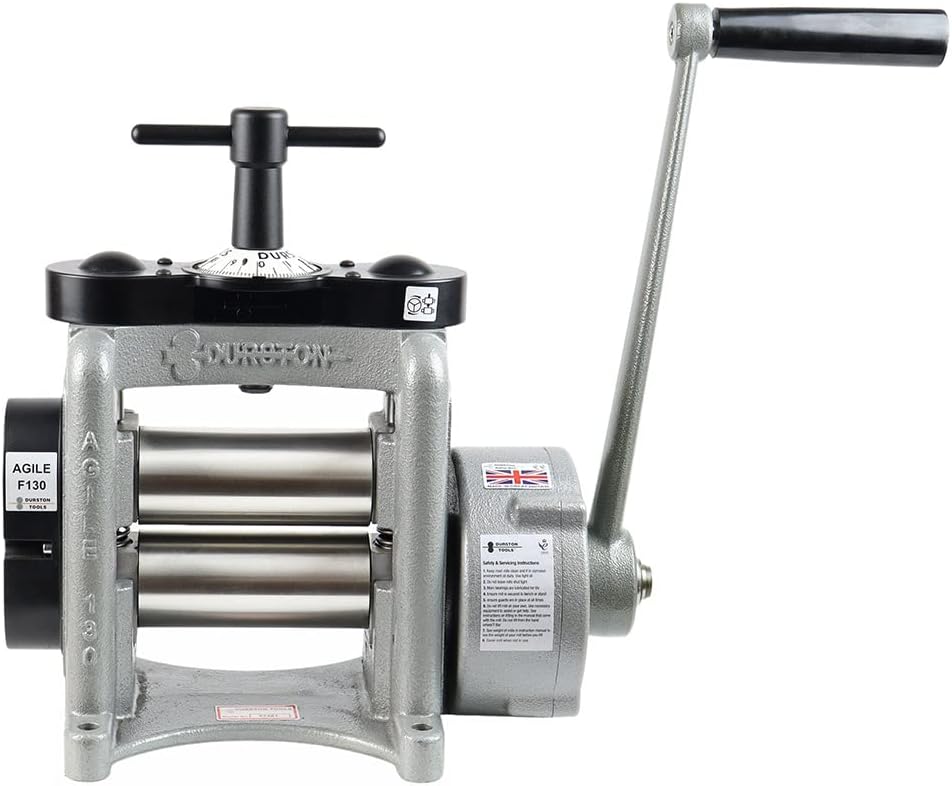
The Agile F130 gives its 130 mm rollers to flat sheet and roll printing, with 5:1 reduction gearing. It is the clearest choice here when a cuff blank or texture plate needs uninterrupted width. It lacks built-in square-wire grooves, so plan a separate wire method if wire reduction is regular work. Confirm the Agile F130 (1030) model number when comparing it with other flat mills.
The Elite C140 expands the flat area to 90 mm while retaining square-wire grooves and adding side extension profiles. That makes it a useful step up when neither the standard Agile C110’s narrow flat section nor a flat-only mill covers your work. It is a substantial machine; measure bench and handle clearance and check which extension rolls and accessories come with the exact package.
Handwheel and extensions: DRM C130RE
Best for frequent profile changes
Durston · DRM C130RE (1021)
Durston DRM C130RE Combination Rolling Mill
Price tier: $$$$Professional
A cast-iron combination mill with a calibrated handwheel, 75 mm flat section and side extension rollers.
Best for: Frequent wire and sheet work where handwheel adjustment and side extensions matter more than maximum flat width.
Specs, strengths and limitations
Roller width
130 mm
Flat rolling area
75 mm
Wire grooves
11 square grooves, 1–8 mm
Gear ratio
5:1 reduction
Maximum opening
6 mm
Strengths
Calibrated handwheel supports repeatable gap adjustment
75 mm flat area plus 1–8 mm square grooves
Side extensions provide four half-round profiles
Limitations
Flat section is narrower than the Elite C140 despite similar overall size
Heavier construction requires sturdy permanent mounting
The DRM C130RE combines a 75 mm flat section, eleven square grooves from 1–8 mm, and four included half-round side profiles. Its calibrated handwheel and heavier cast frame suit a bench that changes roller gaps and wire profiles often. The trade-off is weight and a narrower flat section than the Elite C140. Choose it for the adjustment layout and extension capability, not for the largest sheet width.
Durston rolling mills compared by model-specific specifications
Standard Agile mills use a lighter frame and T-bar adjustment. The DRM range uses a heavier cast frame and calibrated handwheel, and some DRM models include side extensions. The exact model matters more than the range label: the Elite C140 adds extensions and a wider flat section, so the simple “Agile has no extensions” rule does not cover the Elite line.
The C110 and C130RE also differ in capacity. The C110’s 50 mm flat area is useful for small jewelry stock. The C130RE gives 75 mm of flat area and larger square grooves. Both are combination mills; neither gives the continuous 130 mm flat width of the F130. Durston’s model comparison chart is useful for checking adjacent models before you commit to a bench layout.
Combination vs flat Durston models
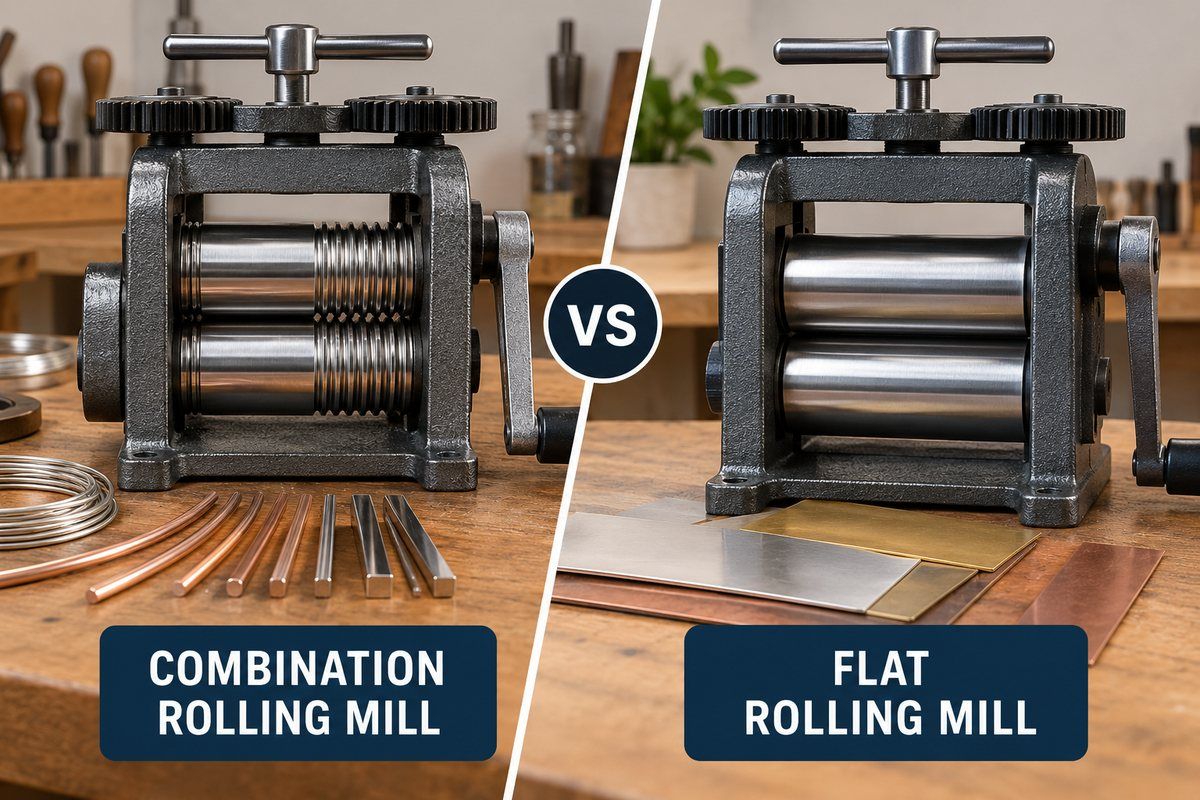
Choose a combination mill when one machine must roll sheet and form square wire. Choose a flat mill when the width of clean, uninterrupted sheet matters most. A combination machine can still roll sheet, but the grooves consume part of the roller face. An F130 cannot replace the C110 or C130RE for square wire without another tool. See combination vs flat mills for a fuller workflow comparison.
The same logic applies to texture work. Measure the plate or material and the metal together, then check the mill’s opening and flat width. Keep abrasive or hardened items away from polished rollers, and follow Durston’s instructions for safe reductions and roller care.
Gearing and bench setup
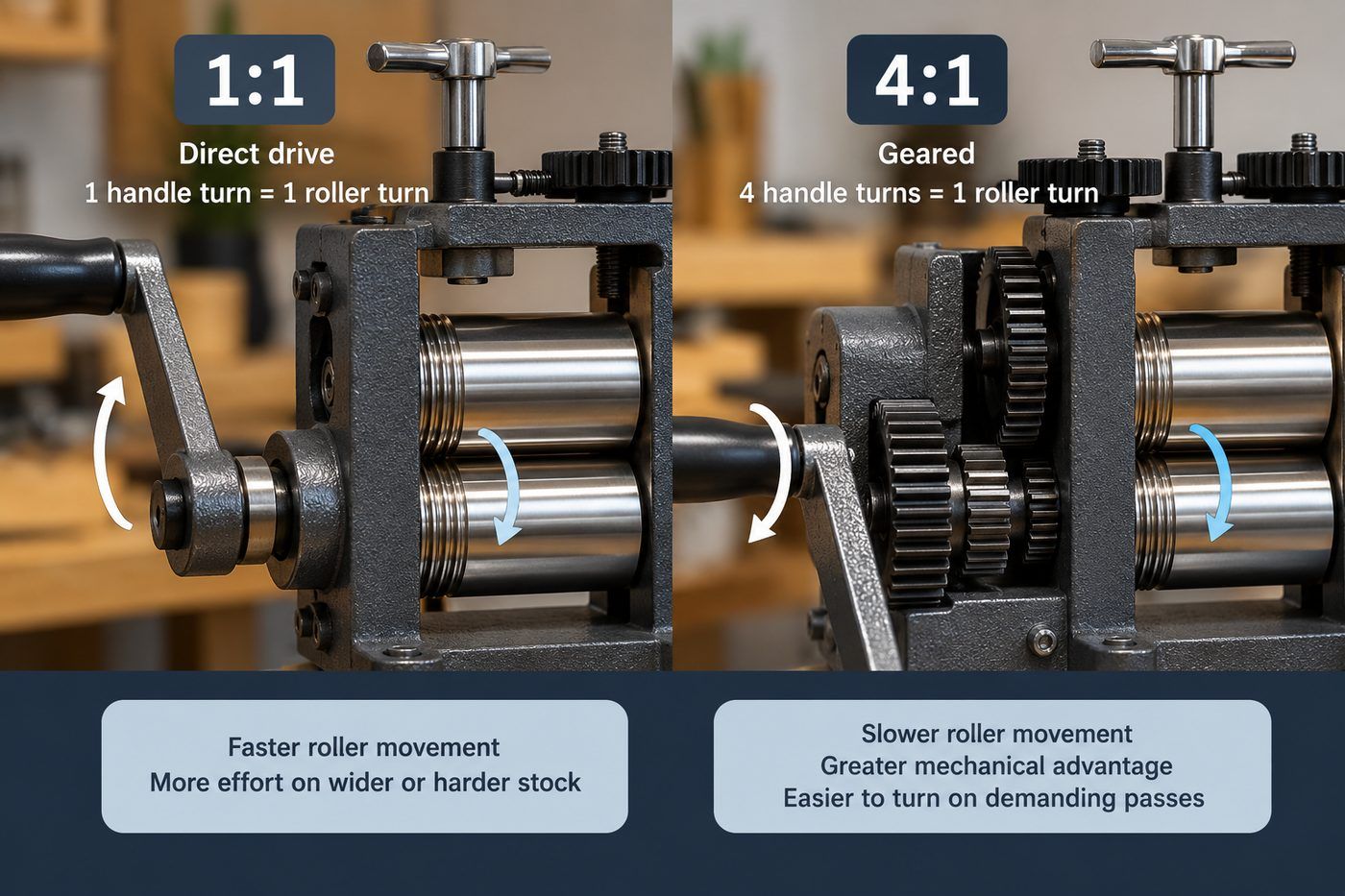
The Mini C80 is direct drive. The Agile C110 has 4:1 reduction, while the larger models here use 5:1. Reduction gearing lowers handle effort but requires more handle turns per roller rotation. It does not justify forcing thick or work-hardened stock through in one heavy pass. Read how mill gear ratios work if you are moving up from direct drive.
Before ordering, check the model’s mounting-hole diagram, bench strength, handle sweep and feed clearance on both sides. A mill should be bolted to a rigid surface. Keep the rolls clean and protected from moisture, and make early passes on inexpensive stock while you learn the adjustment feel.
Is a Durston worth it over a budget mill?
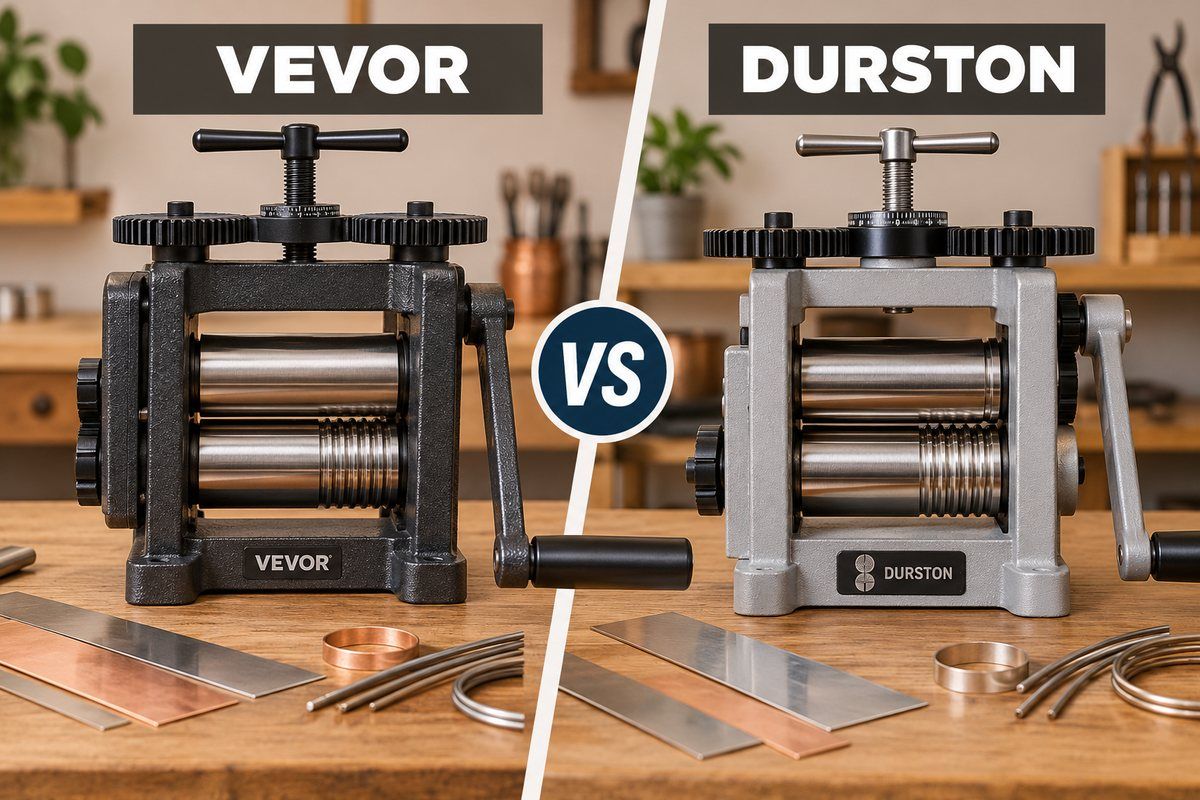
Durston publishes model-specific diagrams, manuals and replacement-roll information. Those matter most when the mill is a long-term production tool. If rolling is occasional, compare the actual flat width, gearbox, opening and support with lower-cost machines before deciding. Our VEVOR vs Durston comparison and general rolling-mill guide put that price difference in context.
A larger Durston is not automatically an upgrade for every jeweler. If you mainly make narrow rings, the C110 may do everything you need; if you mostly buy pre-sized sheet and wire, a mill may not be your next essential tool. Buy capacity that matches the work you actually repeat.
Frequently asked questions
Which Durston rolling mill should I buy?
Choose the Agile C110 for a general jewelry bench working narrow sheet and square wire. Choose the Agile F130 for wider sheet and roll printing, the Mini C80 for compact small work, or the DRM C130RE when you need a calibrated handwheel and side extension profiles. The Agile Elite C140 combines a wider 90 mm flat section with several wire profiles.
What is the difference between Durston Agile and DRM mills?
Standard Agile mills use a lighter frame and T-bar adjustment and have no side extensions. DRM mills have a heavier cast frame, calibrated handwheel and model-dependent side extension options. The Agile Elite range adds extensions and other features, so compare exact models rather than relying on the range name.
Is a Durston rolling mill worth the price?
A Durston is easiest to justify when rolling is frequent and you need documented specifications, replacement parts and a machine sized for your actual stock. For occasional narrow work, compare a lower-cost mill against the same flat width, gearing and service needs before paying more.
Tools in this guide
Durston
Durston Mini C80 Combination Rolling Mill
$$$A jeweler making small components who wants Durston construction without a geared mill footprint.
We have not personally used every product in this guide. Recommendations are based on specifications, manufacturer documentation, specialist references and owner experiences.
Specifications come from manufacturer documentation where it is available.
Specialist references, supplier catalogs and owner experiences are used to understand real-world strengths and weaknesses.
We do not claim physical testing, and we do not publish scores or star ratings.
Choose the right jewelry rolling mill by roller width, configuration, gearing and bench space, with a research-based look at budget and professional options.
Learn what 1:1, 2:1 and 4:1 rolling mill gear ratios mean, how reduction gearing changes torque and handle effort, and whether a geared rolling mill is worth it.
Combination vs flat rolling mills compared for jewelry making — including usable sheet width, wire grooves, versatility and which type is better for your bench.
Compare VEVOR and Durston rolling mills on gearing, roller finish, alignment, usable width, durability and support to decide whether a premium mill is worth the extra cost.