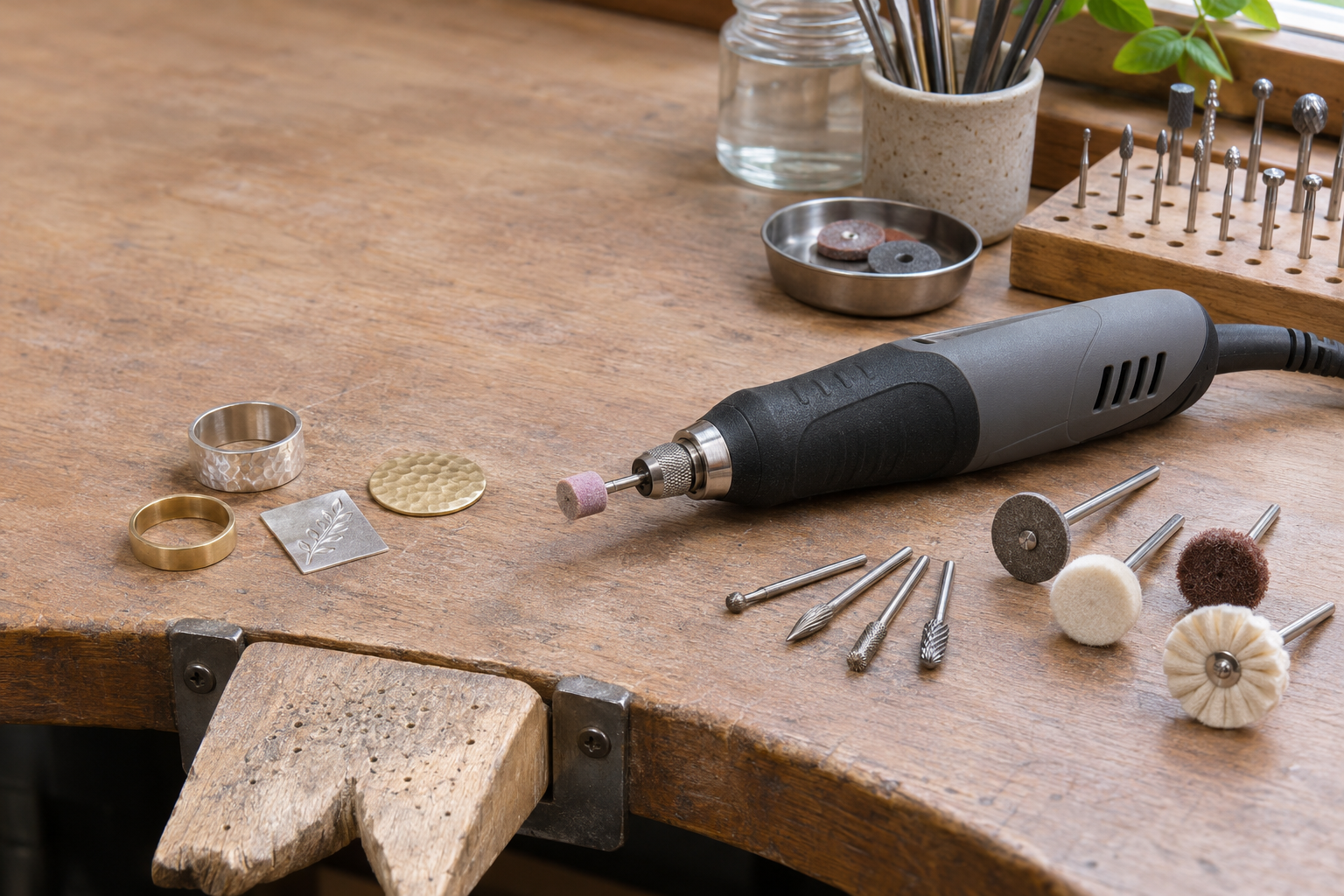
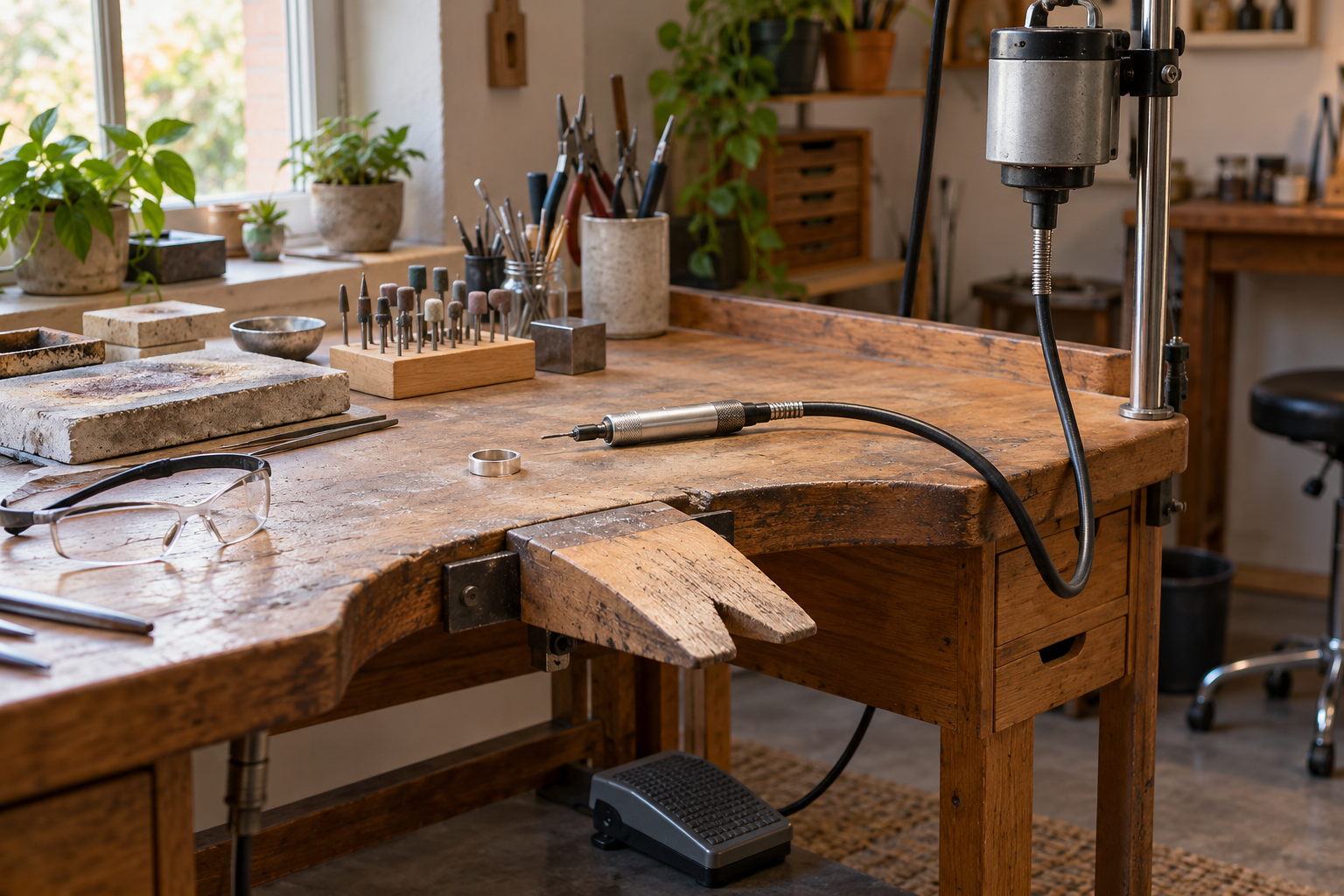
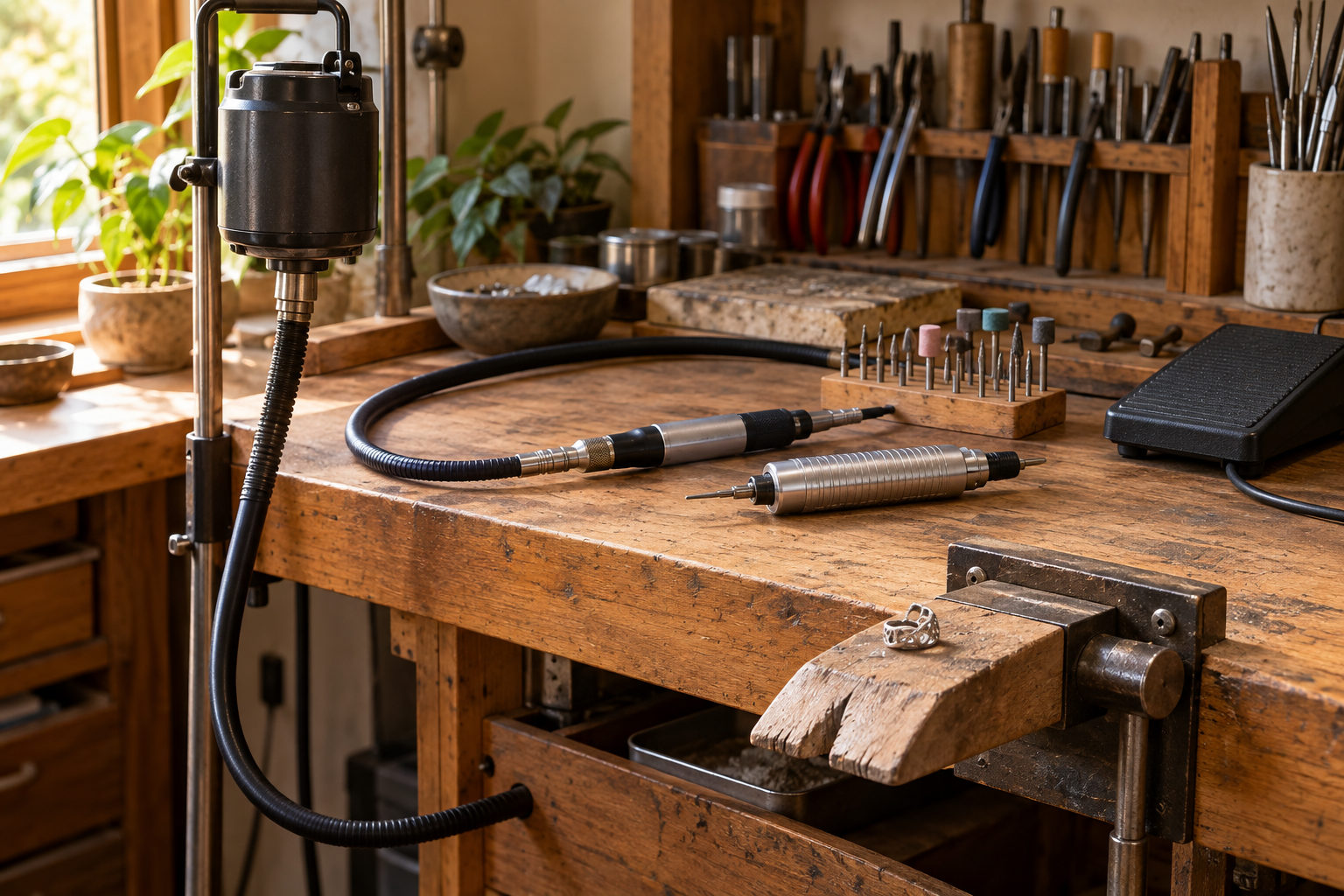
A useful rotary tool for jewelry needs more than a high top speed. The grip must let you approach a small piece safely, the chuck or collet must hold your burs, and the speed control must suit the accessory. These five tools serve different jobs: a first corded motor, a stronger mixed-shank setup, a cordless station, light pen-grip detail and repeated collet-based bench work.
Quick answer
Which rotary tool should I choose for jewelry making?
Start with the Dremel 3100-1/15 if you want one reasonably priced, full-size motor for occasional drilling, sanding and polishing. Move to the 4300-5/40 if you change between shank sizes often and want a keyless chuck. The 8240-5 is the portable choice; the Stylo+ 2050-15 suits light decorative detail; and the PROXXON IBS/E suits a fixed bench where precise collets matter. For frequent long sessions, compare a dedicated jewelry flex shaft before committing to a motor held in your hand.
The 3100 gives a beginner a 1.2 A corded motor and five marked settings spanning 5,000–35,000 rpm. Its manual identifies 1/32, 1/16, 3/32 and 1/8-inch collet capacities; check which collet is supplied with your kit before buying burs. This is the sensible starting point when you want to learn which rotary tasks recur before paying for a more elaborate system. The included sharpener is for general household use, so choose jewelry-specific accessories for your actual work.
The 4300’s keyless three-jaw chuck makes it easier to alternate between small drills, mandrels and other Dremel accessory shanks. It adds a 1.8 A motor and electronic speed feedback across 5,000–35,000 rpm. Its five included attachments make the kit broad, but several serve woodworking or yard-tool jobs rather than the jewelry bench. Pay for this model when faster accessory changes and stronger corded operation matter to you, not for the accessory count alone.
The 8240-5 keeps the full-size 5,000–35,000 rpm range while running on a 12 V, 2.0 Ah battery. That is useful if you teach, share a workspace or move between a worktable and a bench. The kit includes a charger and five accessories. Plan for charging and the weight of the battery at the hand; if you work in one place all day, a corded setup avoids interruptions.
The Stylo+ has a narrow pen-like grip and weighs 6.8 oz, which helps when tracing decorative marks or guiding a small polishing accessory. Its 0.5 A motor and 5,000–22,000 rpm range are for light work. Dremel does not recommend it for cutting; do not make it your only motor if you intend to drill or remove substantial metal.
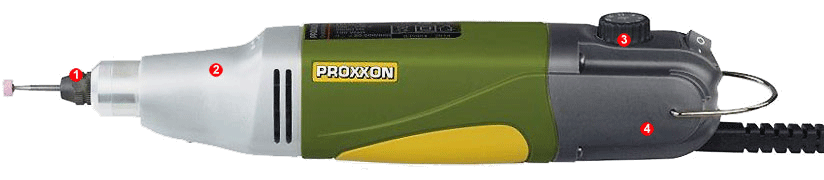
The IBS/E uses a die-cast aluminum head and ball-bearing steel spindle. Six supplied steel collets cover 1/32 through 1/8 inch, including 3/32 inch for many jewelry burs. Its electronic control covers 5,000–20,000 rpm. It is a good fit when you value a securely held, known shank size and repeat detail tasks at a permanent bench. If you swap between varied shanks constantly, the 4300’s chuck is more convenient.
Handheld tool or flex shaft?
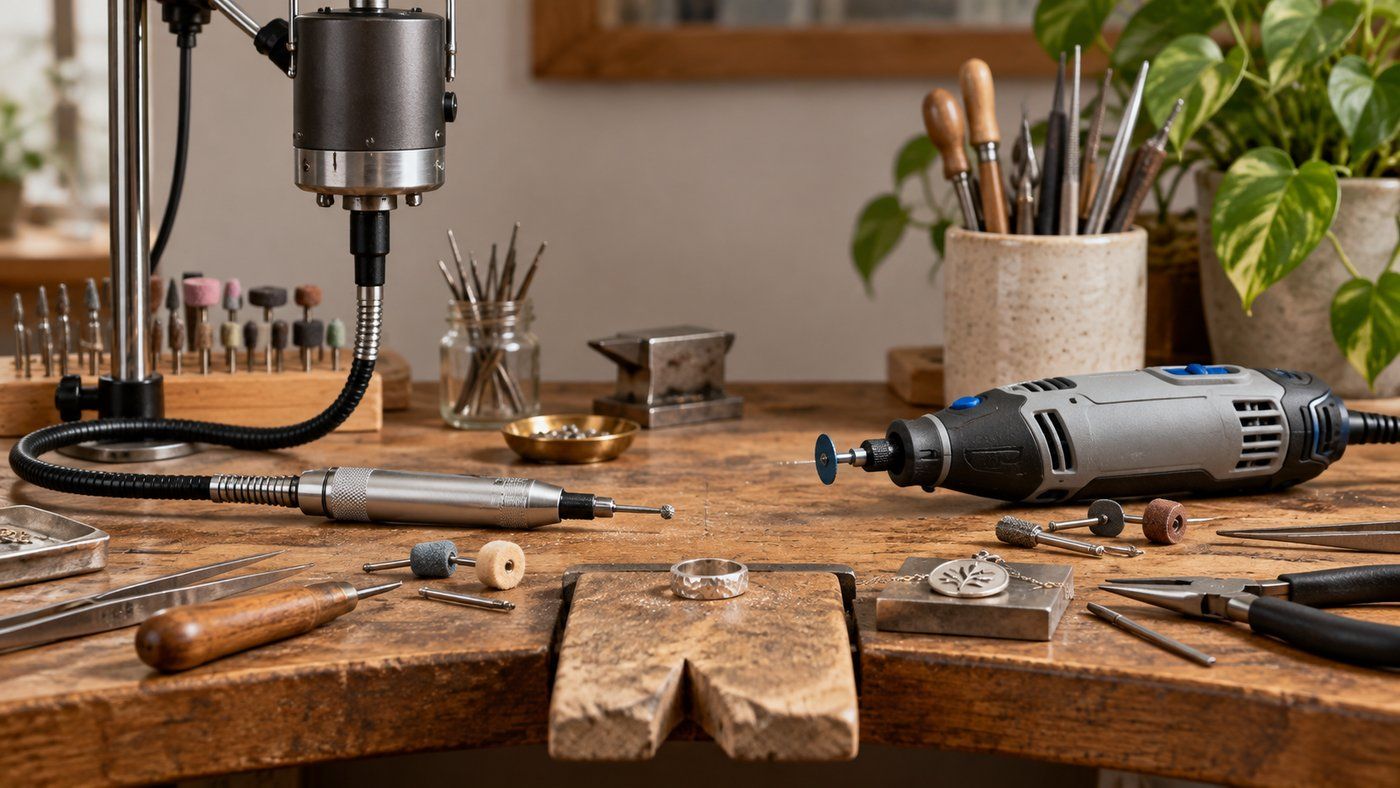
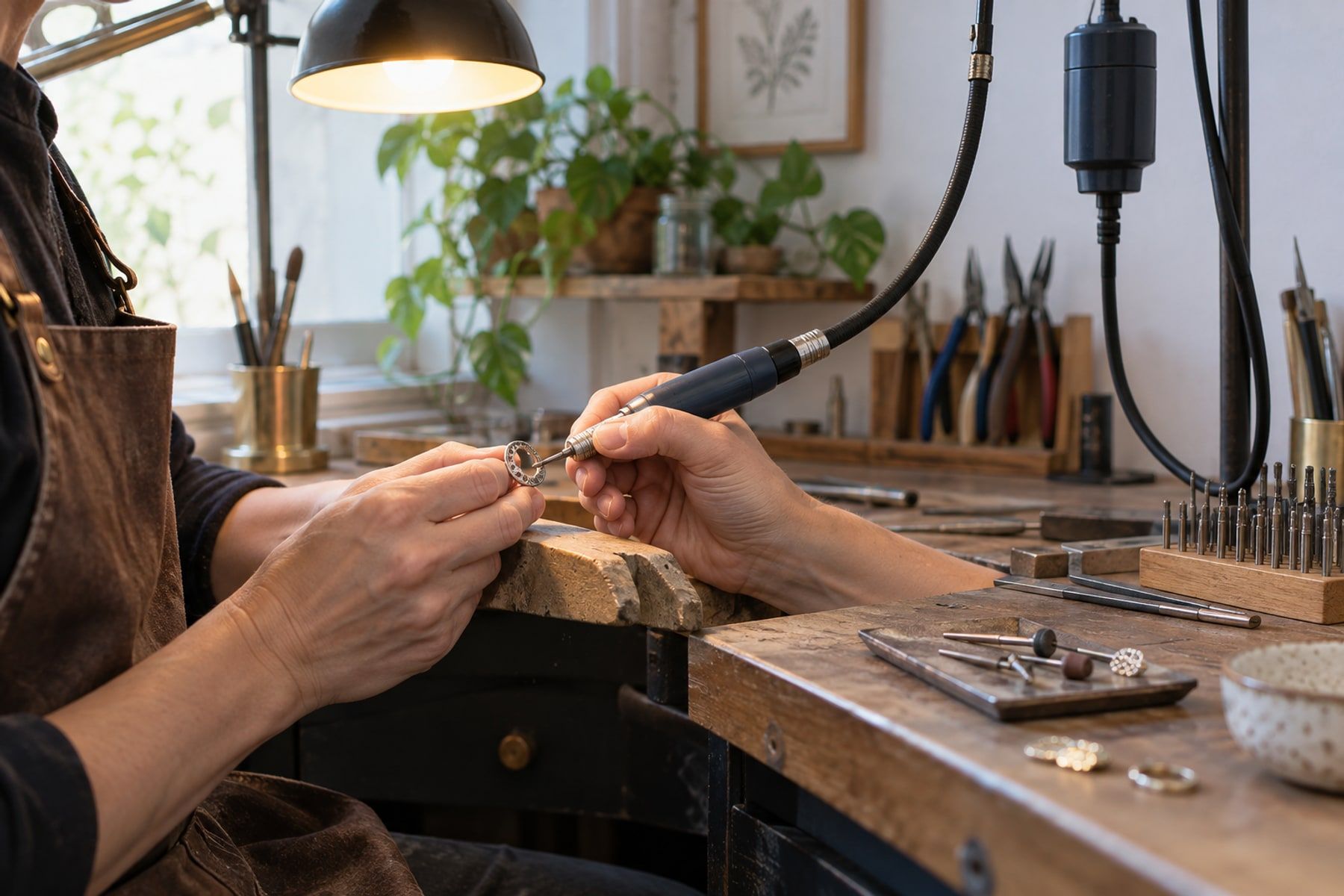
A handheld tool is easy to store and works well for short runs of drilling, sanding, deburring and small-area polishing. The cost is that you hold the motor and adjust speed on the body. A dedicated jewelry flex shaft leaves a smaller handpiece in your hand and commonly gives foot-operated speed control. Our flex shaft versus Dremel comparison covers that workflow difference, while the budget flex shaft guide compares complete entry systems.
If you already own a compatible Dremel, its 225-02 flex shaft attachment is a smaller step. It has a 36-inch cable and a lighter working grip, but still uses the host motor’s speed control. The maker lists the 3100, 4300 and 8240 among compatible motors. Position the motor securely so the cable hangs in a gentle curve; do not assume an attachment gives you the pedal and handpiece choices of a dedicated system.
Speed, collets and accessories
Match speed to the accessory, not to the tool’s maximum. The 3100 manual gives approximate speed bands and calls for a practice piece to check the result. Polishing wheels, brushes, drills and abrasive points have different permitted speeds. Never exceed an accessory’s rating, and reduce pressure if a tool slows or the metal heats. A high top speed does not make a delicate polishing wheel safer or more effective.
Check shank fit before collecting burs. Common small shanks include 3/32 and 1/8 inch, but a motor’s advertised compatibility does not mean every collet comes in the box. A collet sized for the shank gives secure holding; a keyless chuck reduces time spent changing sizes. For the IBS/E, the six sizes are included. For other kits, check the exact contents and add only the collets, chuck or mandrels your tasks need.
Buy accessories for a job. A few correctly sized drill bits, a deburring or shaping bur, graded abrasives and small polishing wheels are more useful than a large mixed accessory case if you only use a fraction of it. Keep polishing accessories for different compounds separate. The rotary tools hub explains where a rotary motor fits among other bench tools.
What to check before ordering
Model and power: Check the full model suffix, supply voltage, plug and battery or charger contents.
Holding system: Confirm the included collet sizes or chuck match the shanks you actually use.
Working posture: Consider the motor’s size in your hand, cord routing and whether a smaller flex-shaft handpiece would be easier for long sessions.
Support: Check replacement brushes, batteries or service parts, plus shipping and support for your country.
Yes, a full-size variable-speed Dremel can drill, deburr, sand and polish small areas with suitable accessories. Support the work, choose the accessory's permitted speed and use light pressure. For long sessions of fine bur work, a separate flex-shaft handpiece is usually easier to hold.
What Dremel attachments do jewelers use?
A flex-shaft attachment can move the motor weight away from your hand, while a suitable chuck or collet holds the shanks you use. Small sanding drums, polishing wheels, brushes and drill bits should be chosen for the specific metal and task. Check compatibility with your exact motor and accessory size.
Rotary tool or flex shaft for a beginner?
A handheld variable-speed rotary tool is a flexible starting point for occasional work and limited bench space. Choose a dedicated flex shaft when rotary work becomes frequent and a small handpiece plus foot speed control would make repeated tasks easier.
Can the Stylo+ drill or cut metal?
The Stylo+ is intended for light decorative work and its maker does not recommend it for cutting. Choose a full-size tool or suitable drill setup when you need holes or substantial metal removal.
We have not personally used every product in this guide. Recommendations are based on specifications, manufacturer documentation, specialist references and owner experiences.
Specifications come from manufacturer documentation where it is available.
Specialist references, supplier catalogs and owner experiences are used to understand real-world strengths and weaknesses.
We do not claim physical testing, and we do not publish scores or star ratings.
Flex shaft vs Dremel for jewelry making: compare control, hand comfort, speed, drilling, polishing, stone setting and cost to decide which rotary tool fits your bench.
Choose a Foredom flex shaft by motor, handpiece, foot control and kit contents, with clear picks for general jewelry work, quick bur changes, heavy grinding and stone setting.