Explainer · Rolling & Forming
What Size Rolling Mill Do I Need for Jewelry Making?
How to choose rolling mill size for jewelry making — usable flat width vs roller width, 80 vs 110 vs 130 mm mills, cuffs, texture plates and bench space.
Rolling & FormingExplainer
Compare 80mm, 100mm and 130mm jewelry rolling mills by usable flat width, project size, roller layout, gearing, weight and bench space.
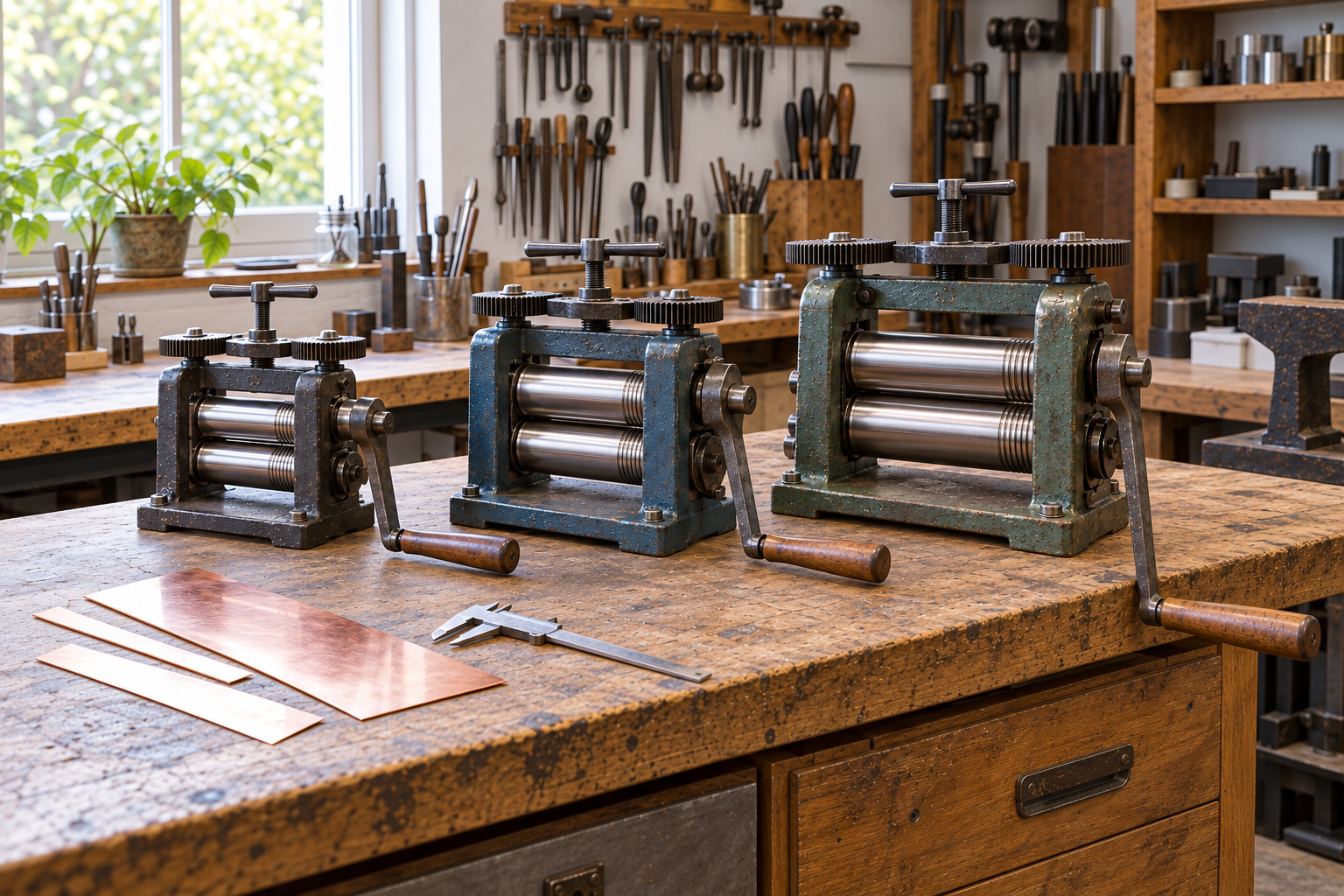
An 80mm rolling mill is compact and capable for small jewelry. A 100mm mill is the most balanced size class for many home benches. A 130mm mill gives wider sheet and texture work more room, but it also demands a stronger mounting point and more working clearance.
That shorthand is only useful after one correction: roller width is not always usable sheet width. Wire grooves occupy part of a combination roll, so a 100mm combination mill can leave less smooth flat area than a smaller-looking flat mill.
Quick answer
Choose 80mm when your work stays small and bench space is tight. Choose 100mm for a practical first or only mill that must handle normal jewelry-scale sheet and wire. Choose 130mm when cuffs, wider sheet, larger texture setups or future capacity justify the extra weight and footprint. In every class, compare the usable flat width, roller configuration, gearbox and mounting dimensions before comparing the headline width.
| Width class | Best fit | Main trade-off |
|---|---|---|
| 80mm | Rings, bezel strip, earrings, small pendants, narrow wire and limited bench space | Easy to outgrow for wider sheet and texture work |
| 100mm | General bench work and a versatile first or only mill | A combination roll may leave much less than 100mm of smooth area |
| 130mm | Cuffs, wider sheet, larger texture setups and a growing studio | More weight, cost, handle clearance and mounting demand |
These are width classes, not promises of equal capability. A maker can build an 80mm direct-drive combination mill, a 100mm geared flat mill and a 130mm geared combination mill. Those machines differ in more than width.
The decision becomes clearer when you separate four specifications:
If a specification sheet gives only total roll length, ask for the roller diagram or the flat-area measurement before assuming a sheet will fit.
An 80mm-class mill earns its place by staying compact. It suits jewelers who mainly make small components and want the mill close to the main bench without surrendering a large area to it.
Typical work includes:
Durston’s Mini C80 illustrates the class. Its maker lists 80mm-wide, 45mm-diameter rolls, a direct-drive crank, a 5mm maximum sheet opening and a body approximately 255mm long, 170mm wide and 265mm high. The same page lists a product weight of 15.1kg.
Those dimensions make it easier to place than a full-size geared mill, but compact does not mean portable during use. The maker still instructs users to fasten the mill securely. A crank creates leverage, and an unsecured base turns controlled rolling into a moving-machine problem.
The most common mistake is treating 80mm as 80mm of flat capacity. On a combination mill, it is not. Inspect the roller drawing and measure the smooth section against your work.
A 100mm-class mill is large enough for a broad range of jewelry tasks without automatically becoming the dominant object in a small workshop. It is often the easiest width to recommend when a jeweler wants one machine for general work but has no routine need for broad sheet.
The class is also where configuration becomes impossible to ignore.
Durston’s DRM C100R has 100mm rolls, but the maker divides them into 65mm of flat area and 35mm of wire grooves. The mill also uses a 4-to-1 reduction gearbox. Durston’s DRM F100R, by contrast, uses the full 100mm width for flat sheet.
Both are 100mm mills. For a 75mm-wide texture setup, only one is the obvious fit.
That example is more useful than a simple claim that 100mm is “bigger.” It shows why the model suffix, roller diagram and flat-area specification matter as much as the number in the product name.
Choose a 100mm flat mill if sheet reduction, strip and texture work dominate. You keep almost the entire working width smooth.
Choose a 100mm combination mill if reducing wire through shaped grooves is important and 60–70mm of flat area covers the sheet you actually make. The exact split varies by model, so do not transfer the 65mm figure to every 100mm combination mill.
Our combination vs flat rolling mill comparison explains the roller-layout decision in more detail.
A 130mm-class mill is not just a 100mm mill with another 30mm attached. Wider models often move into heavier frames, larger-diameter rolls and stronger reduction gearing because their intended work is more demanding.
Durston’s Agile F130 shows that step. The maker specifies a 130mm flat roll, 60mm roller diameter, a 5-to-1 gearbox, a body approximately 410mm long, 220mm wide and 365mm high, and a product weight of 39.9kg.
Compare that with the Mini C80 example at 15.1kg. The wider machine provides more flat-sheet room, but it also asks much more of the stand, the lifting plan and the space around the crank.
A 130mm flat mill is especially useful for:
Wider is useful only when your work uses the width.
Pepetools’ rolling-mill guidance makes the central limit plain: stock length can continue through the rolls, but maximum workpiece width is set by the usable roll face. It also notes that combination grooves reduce the flat section, often substantially.
That leads to a better comparison method.
Collect the widest examples of what you expect to roll:
Measure the complete setup that must pass between smooth rollers, not just the finished jewelry.
If you regularly reduce square or shaped wire, a combination mill may save space and expand what one machine can do.
If sheet and textures dominate, a flat mill turns more of the headline width into usable capacity. A 100mm flat mill may therefore be more useful to you than a 130mm combination model with a similarly narrow smooth section.
Do not choose a flat section that matches your widest blank to the millimeter. A little spare room makes it easier to feed the piece straight and leaves capacity for a slightly wider future project.
Once the work fits, compare:
Our rolling mill gear-ratio guide explains why a geared mill can feel more controlled on demanding passes.
Start with an 80mm or compact 100mm mill. The deciding measurement is the usable flat section, not the outside of the roll. If a compact model covers your sheet and gives you the wire profiles you need, a larger machine will not improve the jewelry merely by being wider.
A 100mm geared mill is the strongest default. Choose flat rollers when textures and sheet dominate; choose combination rollers when shaped-wire reduction earns the lost flat width.
Look first at a 130mm flat mill or a wide combination mill whose documented flat section fits the whole setup. Confirm the weight, bolt pattern and handle clearance before treating the extra capacity as usable.
| Your recurring work | Start with | Verify before buying |
|---|---|---|
| Rings, bezel strip, earrings and small pendants | 80mm class | Actual smooth width and whether direct drive suits the stock you reduce |
| Mixed sheet, wire, pendants and narrow bracelets | 100mm class | Flat-versus-grooved split and reduction ratio |
| Cuffs, wide sheet and larger texture setups | 130mm class | Full setup width, machine weight and mounting clearance |
| Mostly sheet at any scale | Flat-roll version | Whether the full stated width is smooth and uninterrupted |
| Frequent shaped-wire reduction | Combination version | Groove profiles and the flat area left beside them |
Measure the machine’s base, but also map the space needed to operate it.
A safe, usable position needs:
Durston’s manual instructs users to bolt hand-operated mills to a strong bench or suitable stand. It also warns against lifting by the handwheel and calls for multiple people when moving heavier machines.
This is why a 130mm mill can fit on paper yet remain awkward in practice. Draw the crank sweep and stock path on your bench plan before drilling holes. If the workshop is still taking shape, use our jewelry bench setup guide to keep the mill out of the central precision-work zone.
Whichever class you choose:
A wider machine does not correct dirty rollers, uneven adjustment or an unstable stand. It simply lets a wider setup enter the roll face.
Choose the smallest well-built mill whose documented usable flat width comfortably covers your widest recurring work.
If two widths both fit, prioritize the better roller configuration, reduction gearbox, construction, adjustment and support. If neither fits on the bench securely, neither is the right mill.
For a broader sizing method, continue to What Size Rolling Mill Do I Need?. If budget is the next constraint, compare researched options in Best Budget Rolling Mills.
Yes, when your work is mainly ring stock, bezel strip, earrings, narrow pendants and small texture samples. Check the smooth flat section rather than the total 80mm roll length, especially on a combination mill.
It is a practical middle class for many home jewelers, but the roller layout still matters. A 100mm flat mill can provide the full width for sheet, while a 100mm combination model may reserve part of the roll for wire grooves.
A 130mm mill is most useful when you regularly roll wider sheet, cuff blanks, larger texture setups or batches that benefit from more working room. It is less compelling when nearly all of your stock is narrow.
Not by itself. Width determines what can fit across the rollers, while roller condition, parallel adjustment, frame rigidity, gearing and rolling technique affect the consistency of the pass.
Only on a flat mill, where most or all of the roll face is smooth. Combination mills divide the roll between a flat section and wire grooves, so their usable sheet width can be much smaller than the headline roller width.
Choose 80mm for consistently small work and a tight bench, 100mm for a balanced first mill, and 130mm when wider sheet, cuffs or larger textures are already part of the plan. Compare actual flat width and mounting requirements before deciding.
We have not personally used every product in this guide. Recommendations are based on specifications, manufacturer documentation, specialist references and owner experiences.
Full details: how we review and research tools and oureditorial policy.
Explainer · Rolling & Forming
How to choose rolling mill size for jewelry making — usable flat width vs roller width, 80 vs 110 vs 130 mm mills, cuffs, texture plates and bench space.
Comparison · Rolling & Forming
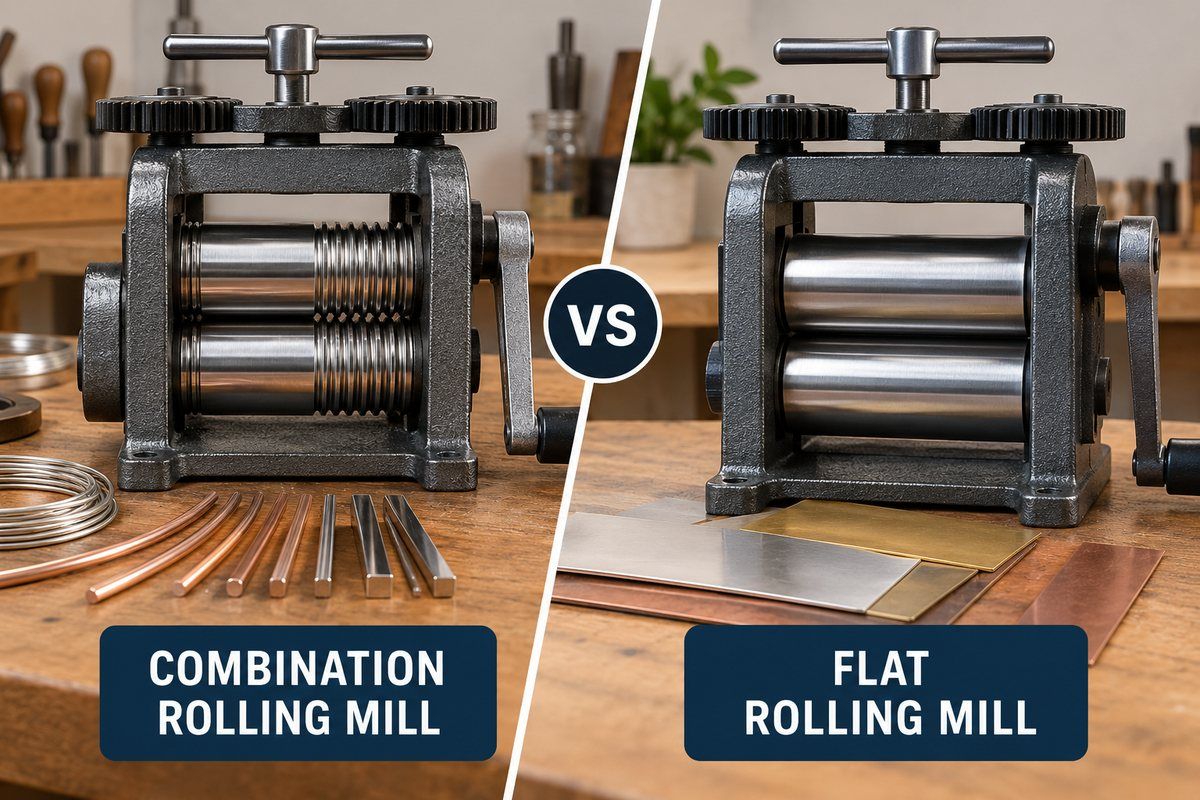
Combination vs flat rolling mills compared for jewelry making — including usable sheet width, wire grooves, versatility and which type is better for your bench.
Explainer · Rolling & Forming
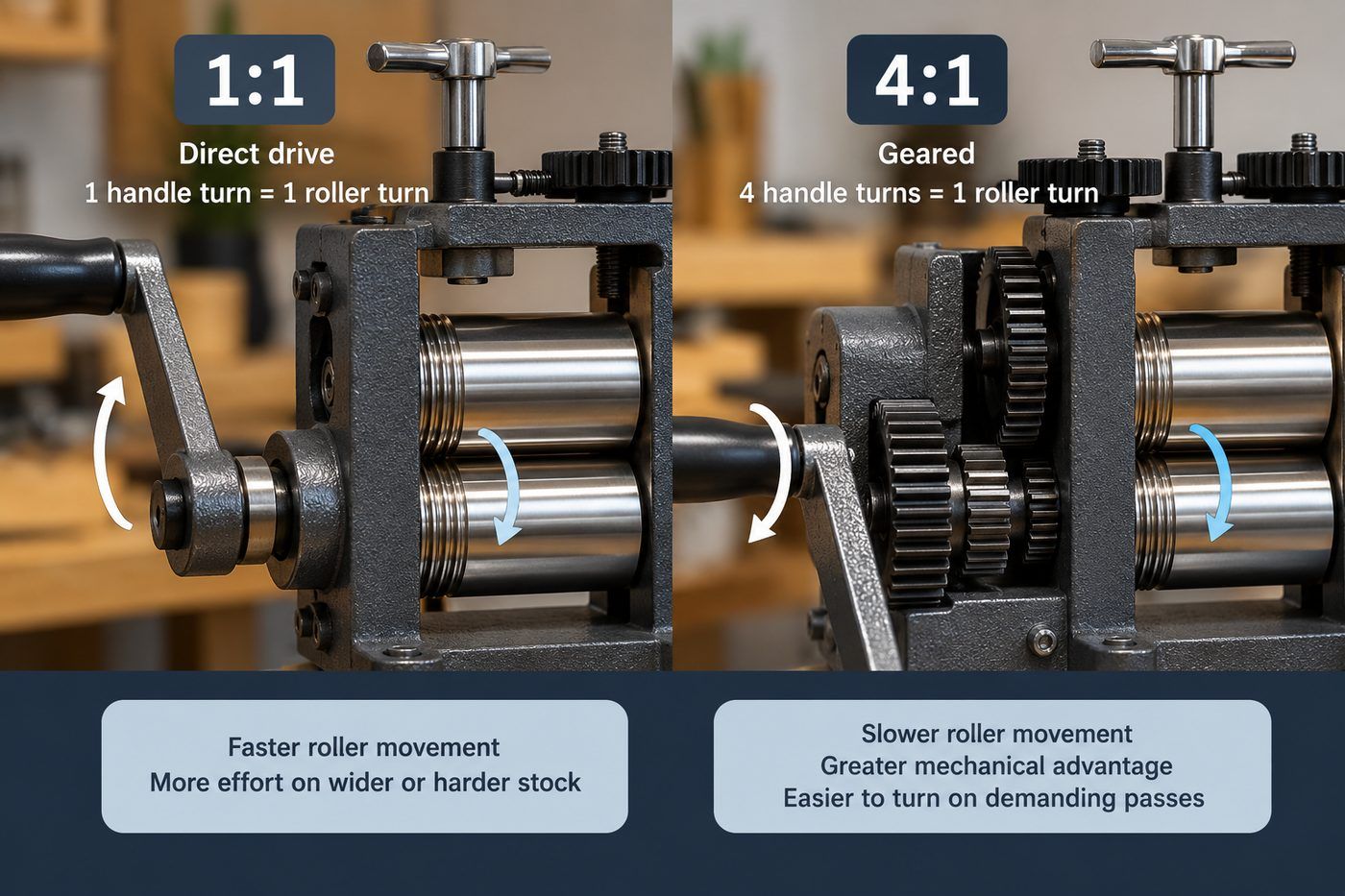
Learn what 1:1, 2:1 and 4:1 rolling mill gear ratios mean, how reduction gearing changes torque and handle effort, and whether a geared rolling mill is worth it.
Buying guide · Rolling & Forming
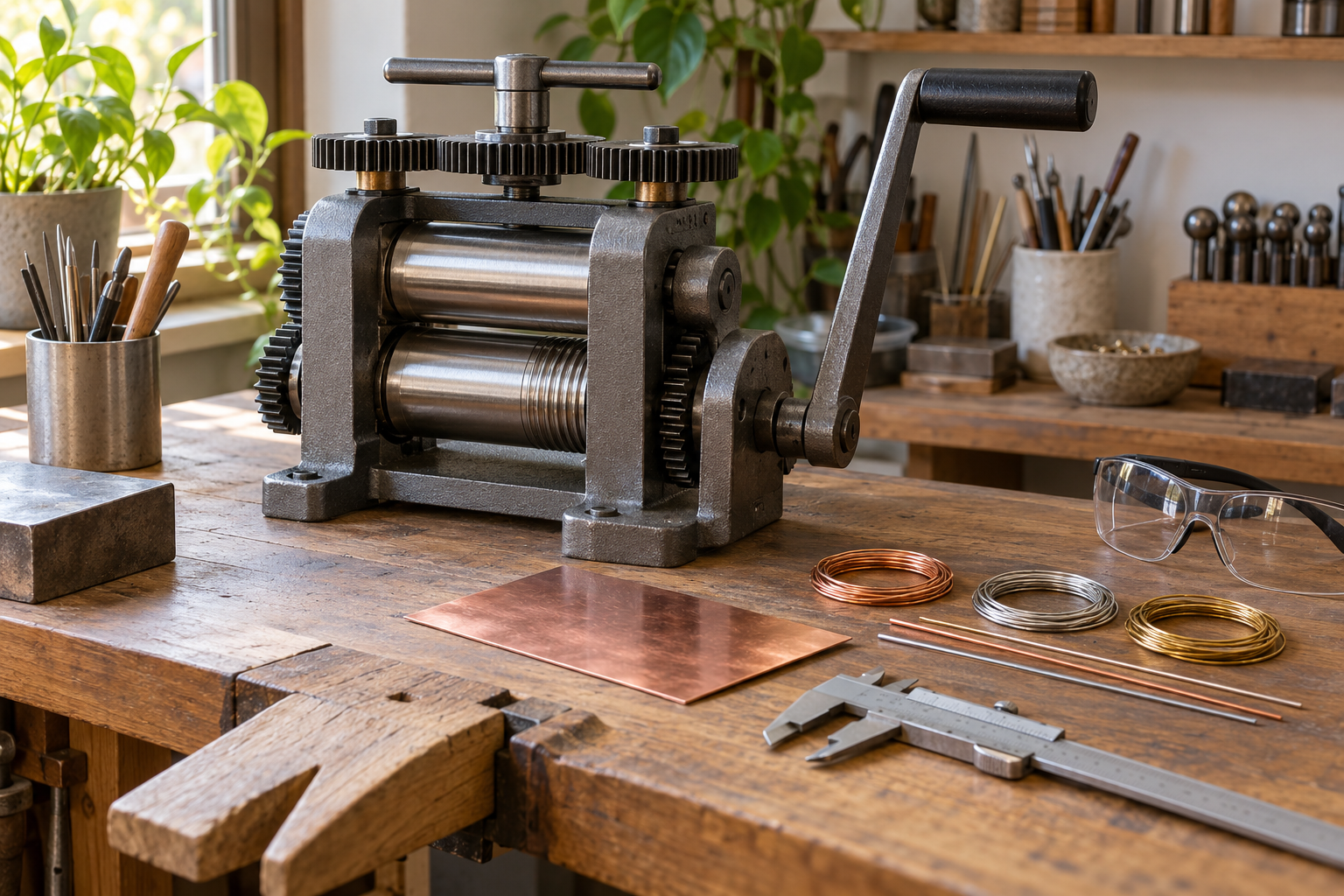
Choose a lower-cost jewelry rolling mill by usable flat width, gearing and the work you actually want to roll.