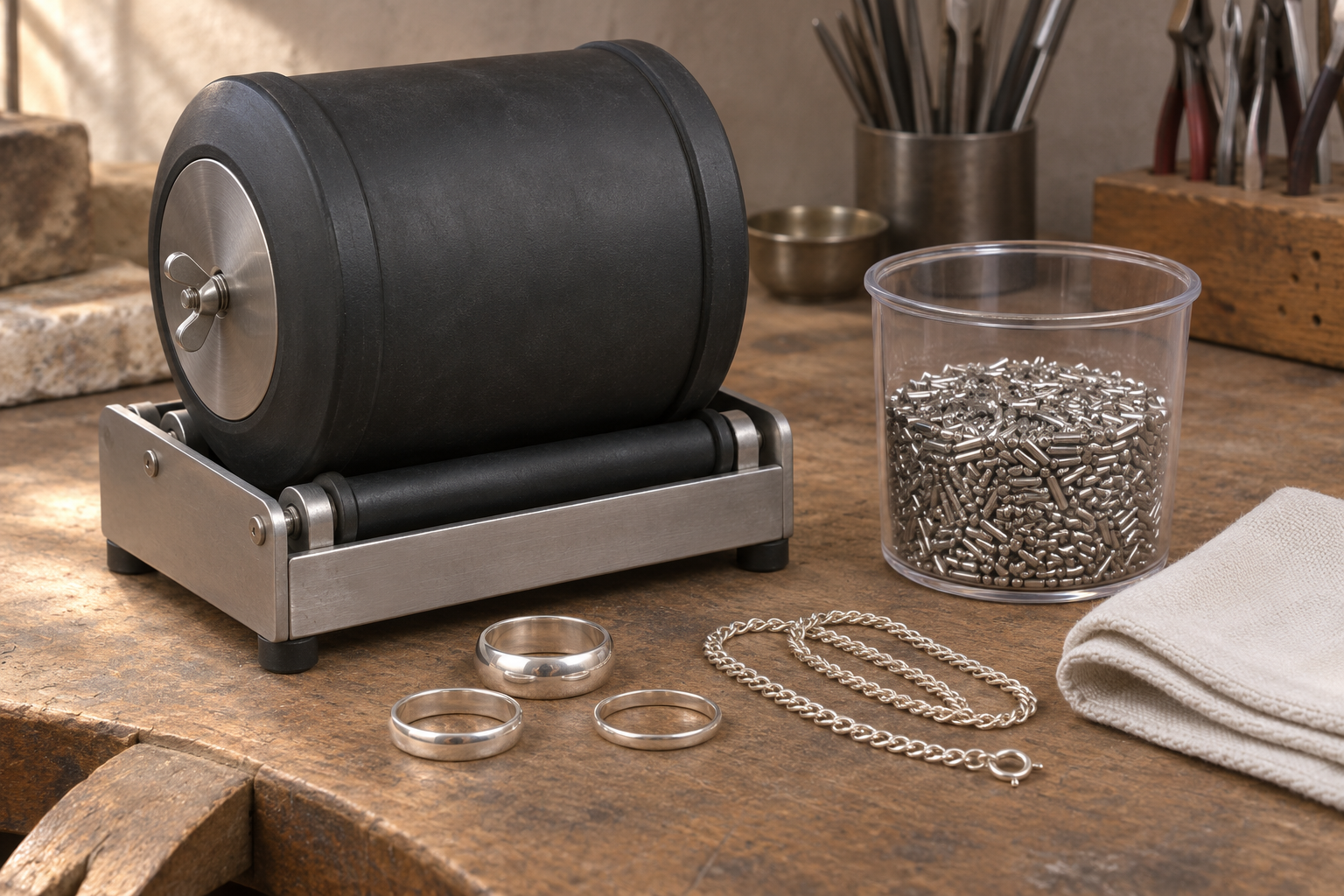
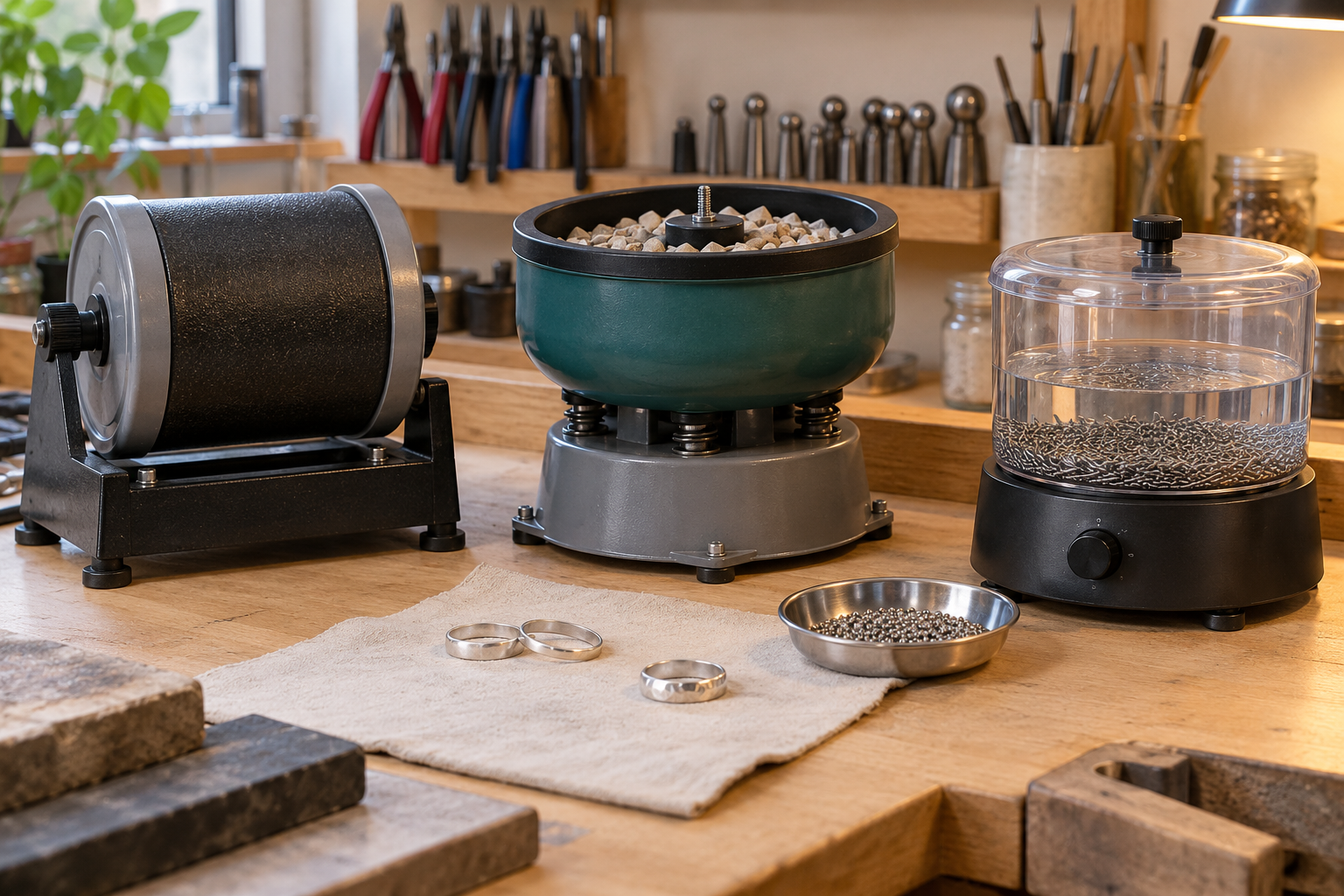
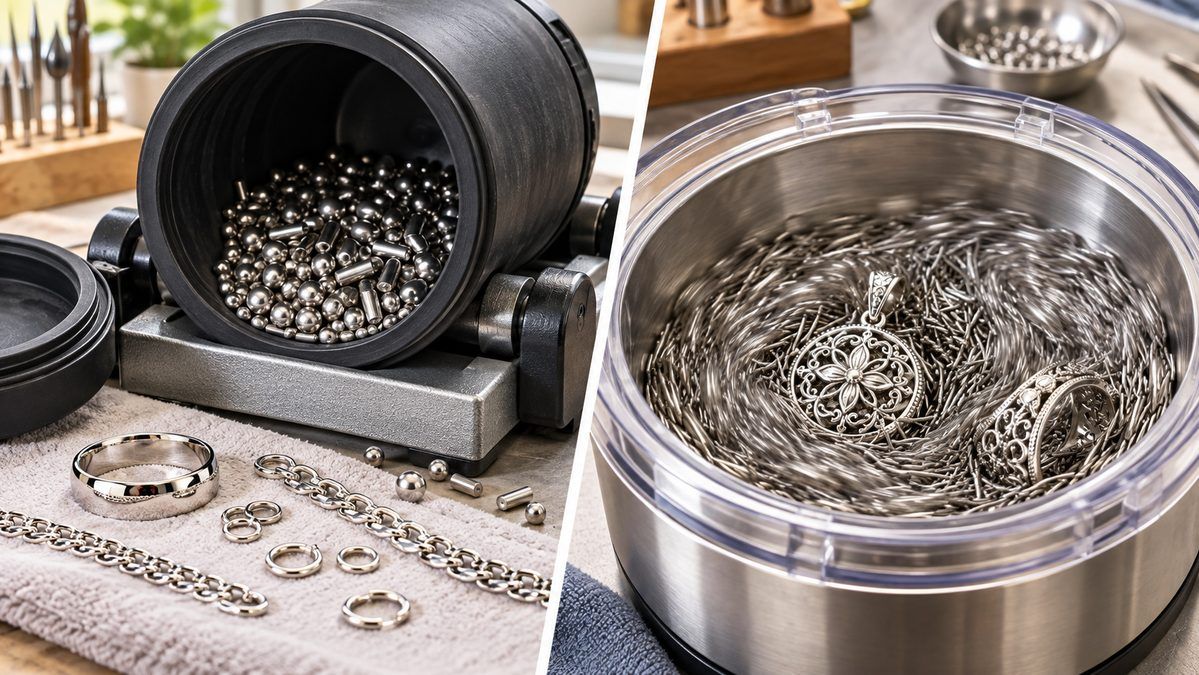
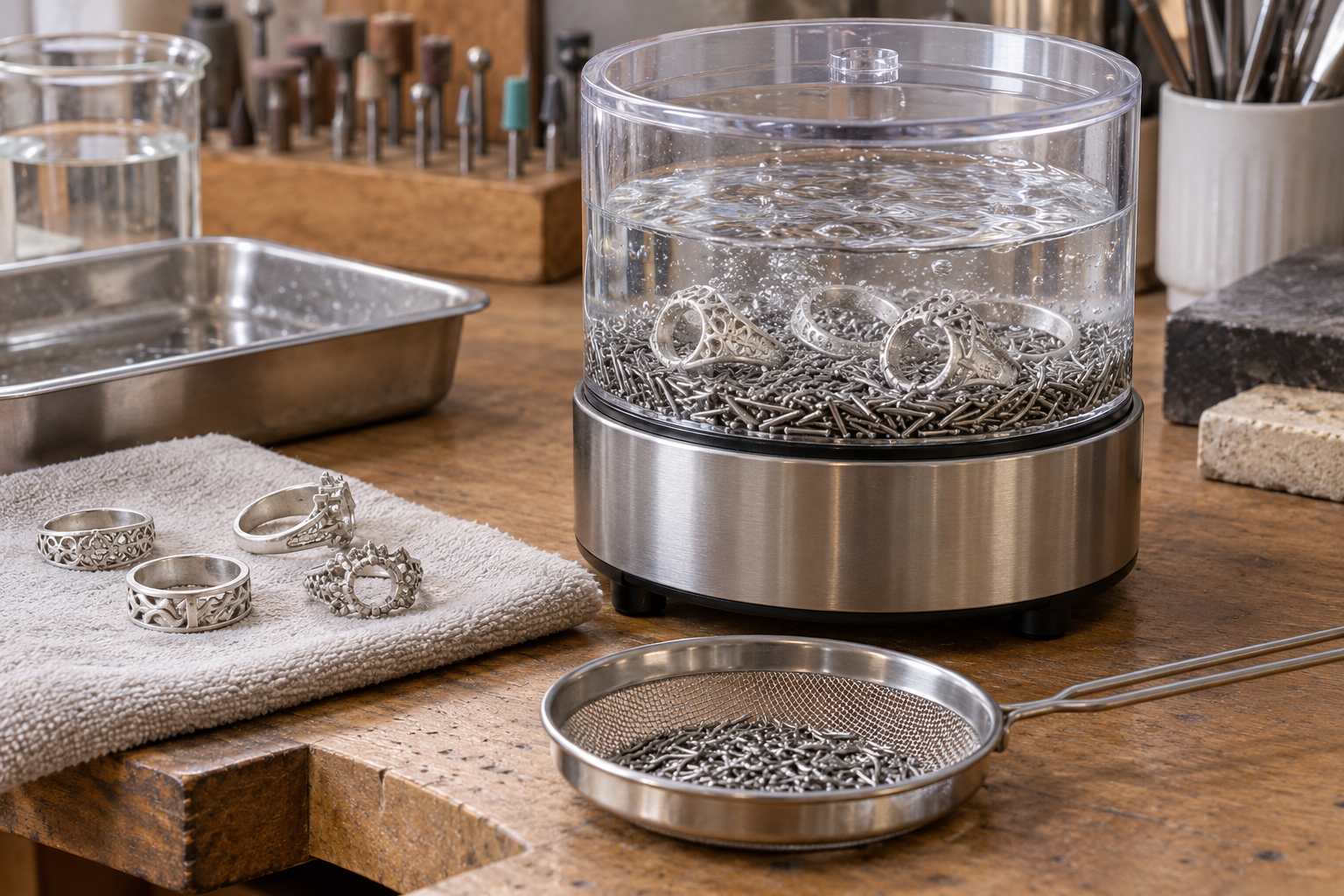
Choose a rotary tumbler for jewelry by barrel size, batch separation and controls. Five researched picks cover a small bench through production burnishing.
Compare usable barrel space and how you will separate media before choosing a drive unit.
A rotary tumbler saves repetitive hand work when you need to burnish prepared silver or gold pieces, chains and findings. The barrel must leave room for the jewelry and media to roll; a larger capacity number alone does not guarantee a better finish. Start with the batch you normally make, then decide whether you need separate barrels, adjustable short cycles or a larger production drum.
Quick answer
Which rotary tumbler should I choose for jewelry?
The Lortone 3A is the straightforward small-batch starting point. Choose the VEVOR KD-68081 if a clear barrel and timed, adjustable runs matter more than a rubber drum. The Lortone 33B keeps two 3 lb batches apart, while the QT6 gives larger individual pieces one 6 lb barrel. Thumler’s high-speed Model B is a substantial step for repeated metal-finishing loads.
Choose the barrel before the motor
Rubber barrels soften the sound of steel shot and suit wet burnishing. A clear polycarbonate barrel makes it easier to watch the load and stop a short run, but shot striking a hard wall can be more noticeable. The 33B’s two 3 lb barrels can separate clean burnishing media from an abrasive recipe. The QT6’s single 6 lb barrel has the same nominal total capacity as the 33B but accommodates a larger piece in one chamber. These are different workflow choices, not interchangeable capacity figures.
Steel shot brightens accessible prepared metal by burnishing; it does not flatten a deep scratch or reach every recessed detail. Ganoksin’s tumbling guidance recommends a rotary barrel for steel burnishing and warns that pointed pins can mark broad surfaces. If fine galleries and tight castings are your recurring problem, read our magnetic versus rotary comparison before sizing a barrel.
Match a rotary barrel to your normal batch
Typical work
Machine to consider
Why it fits
A few prepared rings or short chains
Lortone 3A
Compact single 3 lb rubber barrel
Short timed cycles you want to observe
VEVOR KD-68081
Clear 3 kg barrel, five speeds and timer
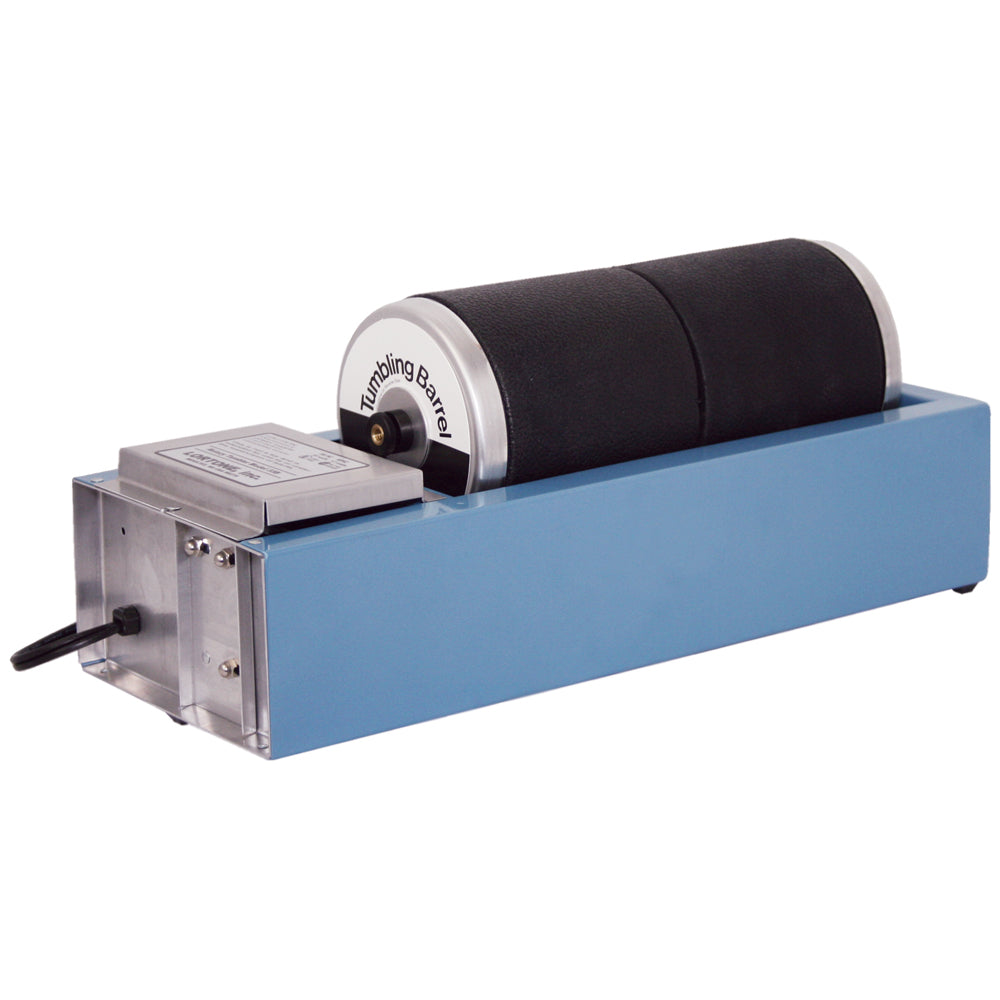
Two separate small batches or media recipes
Lortone 33B
Independent 3 lb barrels on one drive
One larger piece or medium batch
Lortone QT6
One 6 lb rubber barrel instead of two small ones
Repeated substantial metal-finishing loads
Thumler's Model B high speed
15 lb lined barrel and metal-finishing motor configuration
Five rotary tumblers for distinct bench jobs
Best first rubber barrel: Lortone 3A
The 3A has one 3 lb rubber barrel and a base measuring 6 by 9.5 inches. It is a sensible starting point when most runs contain a few pieces and one media recipe. Rubber helps contain the clatter of wet steel shot, and Lortone supplies replacement barrel and drive parts. The trade-offs are simple: only one batch can run, there is no timer or speed control, and the bearings need oiling as the maker directs.
Best for a small first batch
Lortone · 3A (001-092)
Lortone 3A rotary tumbler
Price tier: $$Mid-range
A single-barrel rotary machine with a 3 lb rubber barrel and a compact 6 by 9.5 inch base.
Best for: A home jeweler who wants a small, simple barrel for wet steel-shot burnishing.
Specs, strengths and limitations
Tumbler type
Rotary
Capacity
One 3 lb barrel
Barrel / bowl material
Rubber
Strengths
Rubber barrel contains wet media and reduces clatter
Small footprint suits a home bench
Replacement barrels and belts are available from the maker
The 110 V KD-68081 is rated for a 3 kg total load, with five speed settings, reversible rotation and a 10–60 minute timer. Its clear polycarbonate barrel lets you see whether the load is moving rather than clumping. This configuration suits a jeweler who wants to adjust a short cycle and inspect progress. It is less convenient for long unattended work because the timer ends at 60 minutes. Check the KD-68081 model number, voltage, included media, seal and replacement barrel support for your country before ordering.
The 33B runs two separate 3 lb rubber barrels on one drive. Keep burnishing shot in one barrel while preparing another batch, or maintain distinct media recipes without repeatedly cleaning the same drum. Lortone lists a 6.25 by 10.25 inch base, modestly larger than the 3A. Each piece still has to fit a 3 lb barrel; this is not a substitute for one larger chamber. Like the 3A, it requires periodic oiling and has no independent control for each barrel.
Best for two separate batches
Lortone · 33B (004-091)
Lortone 33B twin-barrel rotary tumbler
Price tier: $$Mid-range
A twin-barrel rotary machine with two separate 3 lb rubber barrels on a compact base.
Best for: A bench that needs to keep two media recipes or two small jewelry batches separate.
Specs, strengths and limitations
Tumbler type
Rotary
Capacity
Two separate 3 lb barrels
Barrel / bowl material
Rubber
Strengths
Two barrels keep clean burnishing media apart from abrasive media
More total batch capacity than the 3A
Maker supplies replacement belts and barrels
Limitations
Takes more bench space than the 3A
Requires periodic oiling
Both barrels share one drive rather than independent controls
The QT6 gives one batch a 6 lb rubber barrel and a heavier drive. That is useful when a larger individual piece would be crowded in either 33B barrel, or when cleaning and managing one drum is easier than juggling two. It costs and occupies more than the compact models, and it cannot keep abrasive and burnishing media separate in the same run. Plan for bearing maintenance and check the barrel, belt and voltage configuration before buying.
Best for larger single-chamber work
Lortone · QT6 (006-090)
Lortone QT6 rotary tumbler
Price tier: $$$Upper mid-range
A single six-pound rubber barrel on a larger drive base, giving one batch more room than the 3A or either 33B barrel.
Best for: A jeweler with larger individual pieces or one regular medium-size burnishing batch.
Specs, strengths and limitations
Tumbler type
Rotary
Capacity
One 6 lb barrel
Barrel / bowl material
Rubber
Strengths
One barrel accepts larger pieces than the 3A or 33B barrels
Best for substantial metal batches: Thumler’s Model B high speed
The THU140HS version has a 15 lb metal barrel with a rubber liner and a 3000 rpm motor. Thumler specifies the high-speed version for metal polishing and deburring with steel shot, walnut shell, corn cob or suitable deburring media. That makes it a different step from a small jewelry barrel: it needs a real volume of recurring work, clear bench space and a method for unloading a heavy drum. The maker also calls for motor and bearing oiling. Check that the unit is THU140HS, since the Model B is also made with a 1550 rpm motor.
Best for repeated heavy metal loads
Thumler's Tumbler · Model B high speed (THU140HS)
Thumler's Tumbler Model B 3000 rpm
Price tier: $$$$Professional
A heavy-duty rotary tumbler with a 15 lb metal barrel, rubber liner and high-speed motor intended for metal finishing media.
Best for: A production bench processing substantial metal batches with steel shot or other suitable finishing media.
Specs, strengths and limitations
Tumbler type
Rotary
Capacity
15 lb barrel
Speed
3000 rpm motor
Barrel / bowl material
Metal with rubber liner
Warranty
One-year limited
Strengths
Largest barrel in this shortlist
Maker specifies steel shot and other metal-finishing media
Rubber liner and replaceable drive parts suit repeated use
Limitations
Substantial weight and footprint for a small bench
Requires motor and bearing oiling
High cost is hard to justify for occasional small batches
Finish the surface first. File, sand and pre-polish as needed. Steel shot brightens a prepared surface but will leave deeper marks visible.
Sort the pieces. Keep delicate settings, porous or treated stones and pieces with loose components out until their compatibility is clear. Test one representative piece before committing a whole batch.
Leave space to roll. Use enough suitable stainless shot for contact without packing the barrel so tightly that the contents stop cascading. Follow the machine and media instructions for load and liquid levels; Ganoksin advises liquid only until it peeks through the steel shot.
Use an appropriate compound. A burnishing compound helps the shot work cleanly. Keep abrasive media and clean burnishing shot in separate barrels or clean the barrel thoroughly between processes.
Inspect and dry. Stop the machine before opening it, rinse pieces and media, inspect recesses and settings, and dry the barrel and shot as their makers direct. Keep electrical parts away from spills.
A single 3 lb rubber barrel is a practical starting size for small batches of prepared rings, findings and chain. Choose two small barrels when media or batches must stay separate; move to a larger single barrel when individual pieces need more room to move.
Does a rotary tumbler remove scratches from jewelry?
Steel shot burnishes prepared metal; it does not reliably erase file marks or deep scratches. Complete the filing and abrasive sequence first, then use suitable shot and compound for the desired surface.
Should I tumble jewelry with stones already set?
Check the stone, treatment and setting before tumbling. Fragile or porous stones and loose settings can be damaged. Test one representative piece, or finish the metal before setting stones when the design permits.
Is a magnetic tumbler better than a rotary tumbler?
A rotary barrel is simpler for broad wet burnishing of prepared metal, chains and small batches. Magnetic pins reach narrow recesses and detailed castings that conventional shot may miss. The right process depends on the geometry and finish you need.
Tools in this guide
Lortone
Lortone 3A rotary tumbler
$$A home jeweler who wants a small, simple barrel for wet steel-shot burnishing.
We have not personally used every product in this guide. Recommendations are based on specifications, manufacturer documentation, specialist references and owner experiences.
Specifications come from manufacturer documentation where it is available.
Specialist references, supplier catalogs and owner experiences are used to understand real-world strengths and weaknesses.
We do not claim physical testing, and we do not publish scores or star ratings.
Choose a magnetic pin finisher for intricate jewelry by bowl size, batch capacity and controls. Five researched picks span a small bench to production work.