Choose the motion and media for the surface you need to finish before choosing barrel size.
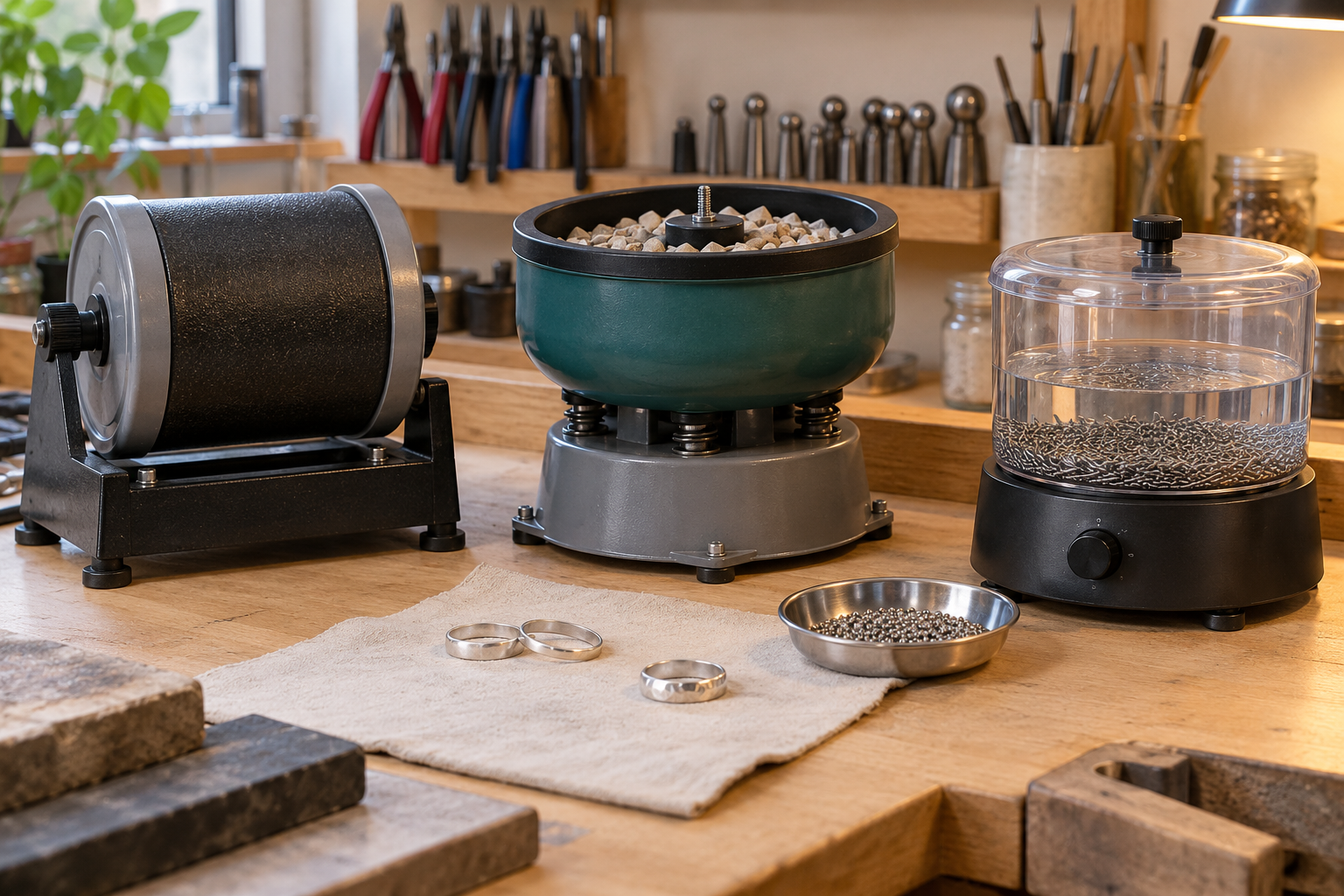
A jewelry tumbler is useful when its motion and media fit the job. Rotary barrels are the starting point for wet steel-shot burnishing of prepared metal. Vibratory bowls can move compatible abrasive or polishing media around small castings. Magnetic finishers move fine steel pins through narrow recesses. These six machines solve different finishing problems, so choose the process before comparing capacity.
Quick answer
Which jewelry tumbler should I buy first?
For a home bench burnishing silver chain, findings and simple rings, start with the Lortone 3A’s small rubber barrel. Choose the VEVOR KD-68081 if adjustable short cycles and a visible load matter more to you. The Lortone 33B keeps two rotary batches separate. For light abrasive finishing of castings, consider Raytech’s TV-5; for intricate recesses, choose a magnetic pin finisher sized for your batch.
Match the machine to the finish
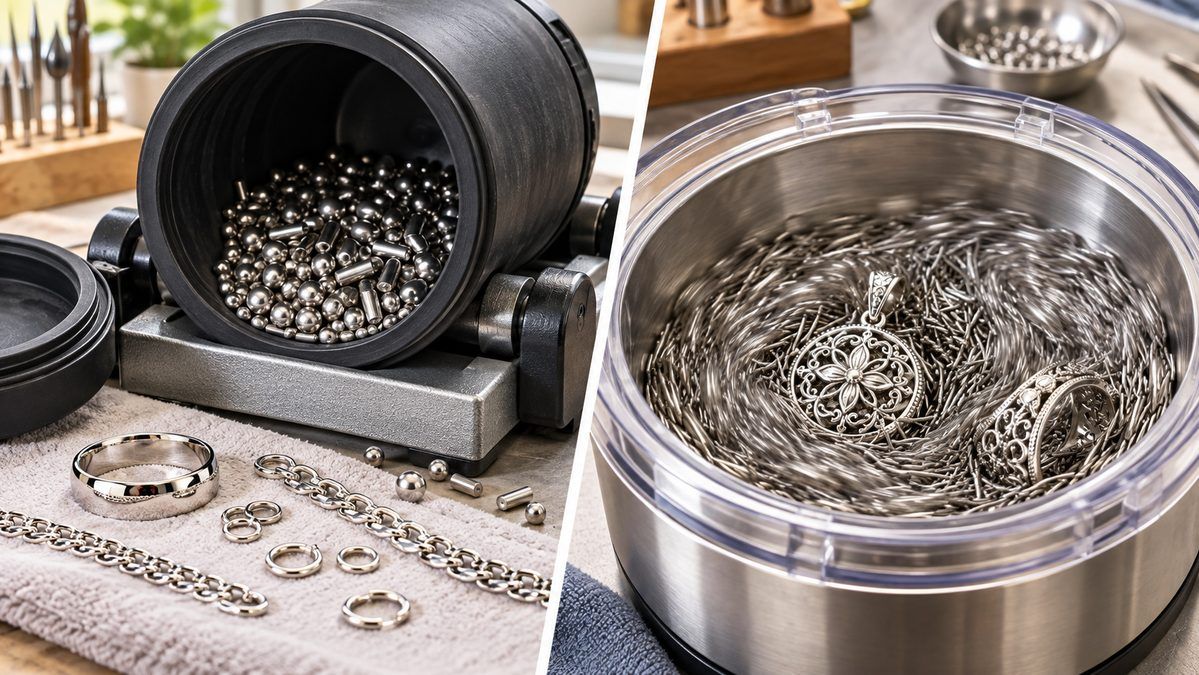
Steel shot presses and slides over a prepared metal surface. It brightens accessible areas, but visible file marks and deep scratches still need filing and sanding first. A magnetic pin finisher reaches tighter geometry, while a vibratory machine can move an abrasive medium for controlled surface refinement. Our magnetic versus rotary comparison explains the different surface effects in more detail.
Choose a tumbler by finishing task
Your main job
Machine to consider
Why it fits
Small wet steel-shot batches
Lortone 3A
One compact rubber barrel
Short controlled rotary cycles
VEVOR KD-68081
Visible load, five speed settings and timer
Two separate rotary batches
Lortone 33B
Two individual 3 lb barrels
Light abrasive work on castings
Raytech TV-5
Small vibratory bowl with documented finishing guidance
A few intricate pieces
Arbe KMT-15
Small magnetic bowl with fine pins
Larger magnetic-pin batches
VEVOR KT-1851
185 mm bowl and reversible action
Six jewelry tumblers for distinct bench jobs
Best small rotary barrel: Lortone 3A
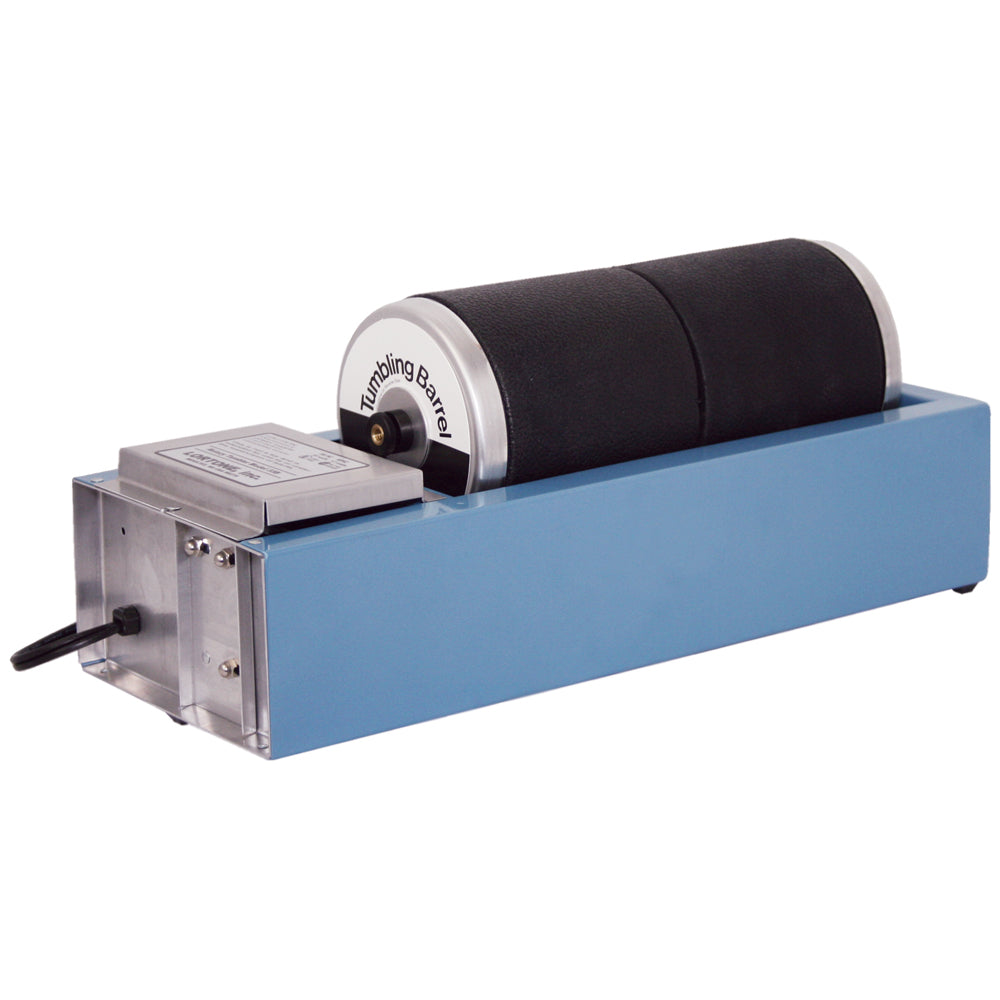
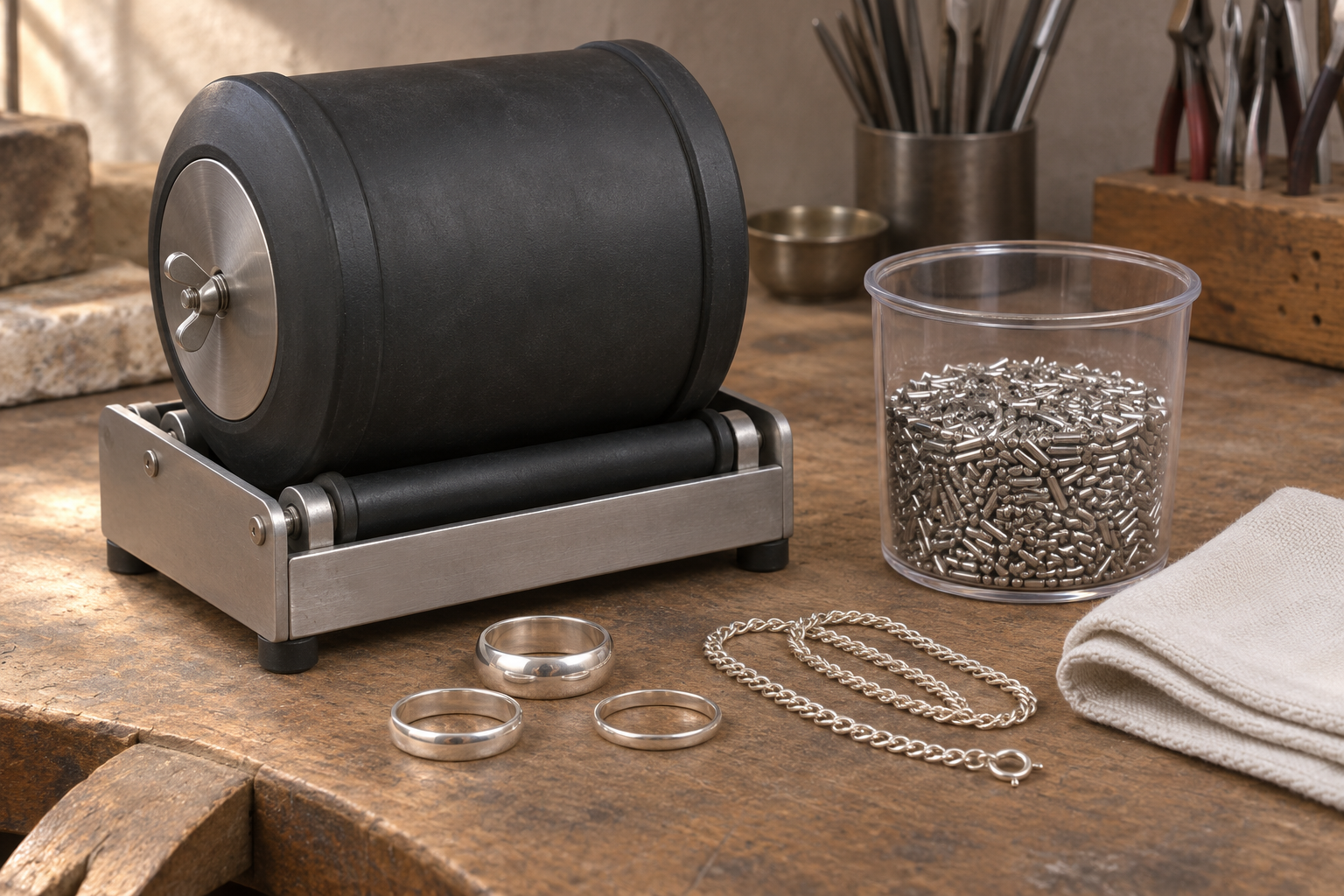
The 3A uses one 3 lb rubber barrel on a 6 by 9.5 inch base. Its simple rotary action fits small wet steel-shot batches after the jewelry has been cleaned and sanded. Rubber contains liquid and reduces the metallic rattle of shot compared with a hard clear drum. The machine needs periodic oiling according to Lortone’s instructions, and one barrel means abrasive and burnishing work must be run separately with thorough cleaning or a spare barrel.
Best small rotary barrel
Lortone · 3A (001-092)
Lortone 3A rotary tumbler
Price tier: $$Mid-range
A single-barrel rotary machine with a 3 lb rubber barrel and a compact 6 by 9.5 inch base.
Best for: A home jeweler who wants a small, simple barrel for wet steel-shot burnishing.
Specs, strengths and limitations
Tumbler type
Rotary
Capacity
One 3 lb barrel
Barrel / bowl material
Rubber
Strengths
Rubber barrel contains wet media and reduces clatter
Small footprint suits a home bench
Replacement barrels and belts are available from the maker
The 3 kg KD-68081 has a clear polycarbonate barrel, five speed settings, direction control and a 10–60 minute timer. It suits a jeweler who wants to see the load and stop a short burnishing run to inspect the result. The hard drum and controls differ from the 3A’s simple rubber barrel. Compare the actual jewelry-and-media load with the stated 3 kg limit, and plan to reset the timer if a process needs longer.
Two separate 3 lb rubber barrels let the 33B keep different media or metals apart while sharing one drive. That is useful if you regularly switch between a clean steel-shot burnish and another compatible rotary process. Its 6.25 by 10.25 inch base is modestly larger than the 3A’s, but both barrels turn together. It is a capacity and separation upgrade, not an adjustable-speed machine; follow Lortone’s oiling instructions.
Best for separate batches
Lortone · 33B (004-091)
Lortone 33B twin-barrel rotary tumbler
Price tier: $$Mid-range
A twin-barrel rotary machine with two separate 3 lb rubber barrels on a compact base.
Best for: A bench that needs to keep two media recipes or two small jewelry batches separate.
Specs, strengths and limitations
Tumbler type
Rotary
Capacity
Two separate 3 lb barrels
Barrel / bowl material
Rubber
Strengths
Two barrels keep clean burnishing media apart from abrasive media
More total batch capacity than the 3A
Maker supplies replacement belts and barrels
Limitations
Takes more bench space than the 3A
Requires periodic oiling
Both barrels share one drive rather than independent controls
Raytech rates the TV-5’s bowl at 0.05 cubic foot, with up to 4 lb of media and work together. Its vibratory action is useful for light deburring and polishing prepared metal parts with a medium chosen for that stage. Raytech’s jewelry finishing instructions describe filing and sanding first and keeping the media moving properly. Do not use steel shot in the TV-5: Raytech’s current product guidance explicitly rules it out. Keep a separate clean bowl if you use one for abrasive cutting and another for polishing.
Arbe describes the Super Mini KMT-15 as an eight-ring machine and includes 65 g of 0.5 by 5 mm pins. Fine pins can reach recesses around intricate metalwork that larger rotary shot may miss. Its limited batch size makes sense for a detail-focused bench rather than bulk production. Check holes, galleries and hollow forms after every run because small pins can lodge in the work.
Best for a few intricate pieces
Arbe · KMT-15
Arbe Super Mini KMT-15 magnetic finisher
Price tier: $$$Upper mid-range
A small magnetic pin finisher with a faceted bowl and a maker-rated load of about eight rings.
Best for: A detail-focused bench finishing recesses in a few intricate pieces per batch.
Specs, strengths and limitations
Tumbler type
Magnetic pin
Capacity
Up to 8 rings per batch
Media included
65 g of 0.5 × 5 mm stainless pins
Strengths
Fine pins can reach narrow decorative recesses
Small footprint suits a fixed jewelry bench
Maker documents the included pin size and one-year warranty
Limitations
Small batch size
Costs more than the compact rotary choices
Fine pins require careful inspection of holes and hollow work
The 110 V KT-1851 uses an 185 mm clear bowl with a stated 800 g load, reversible action, adjustable 1,400–2,000 rpm speed and a 0–60 minute timer. It is the larger magnetic choice when a few rings at a time are too small a batch. Magnetic pins still produce their own fine surface texture, so test a representative piece before processing a whole run and inspect narrow openings when unloading.
Prepare the surface. Remove sprues, file marks and visible scratches before asking burnishing media to brighten the piece.
Keep media stages apart. Abrasive grit carried into a clean burnishing barrel can mark later work. Use separate bowls or barrels where practical.
Load for movement. Count jewelry and media together against the machine’s limit, and follow the maker’s water and compound guidance. The contents must move freely rather than pack into a solid mass.
Test a small batch. Check the finish and delicate features before extending the cycle. Avoid mixing a heavy casting with fragile findings.
Rinse and inspect. Clean the pieces and machine after each stage. Look for trapped pins, damaged settings and incomplete recesses before the next step.
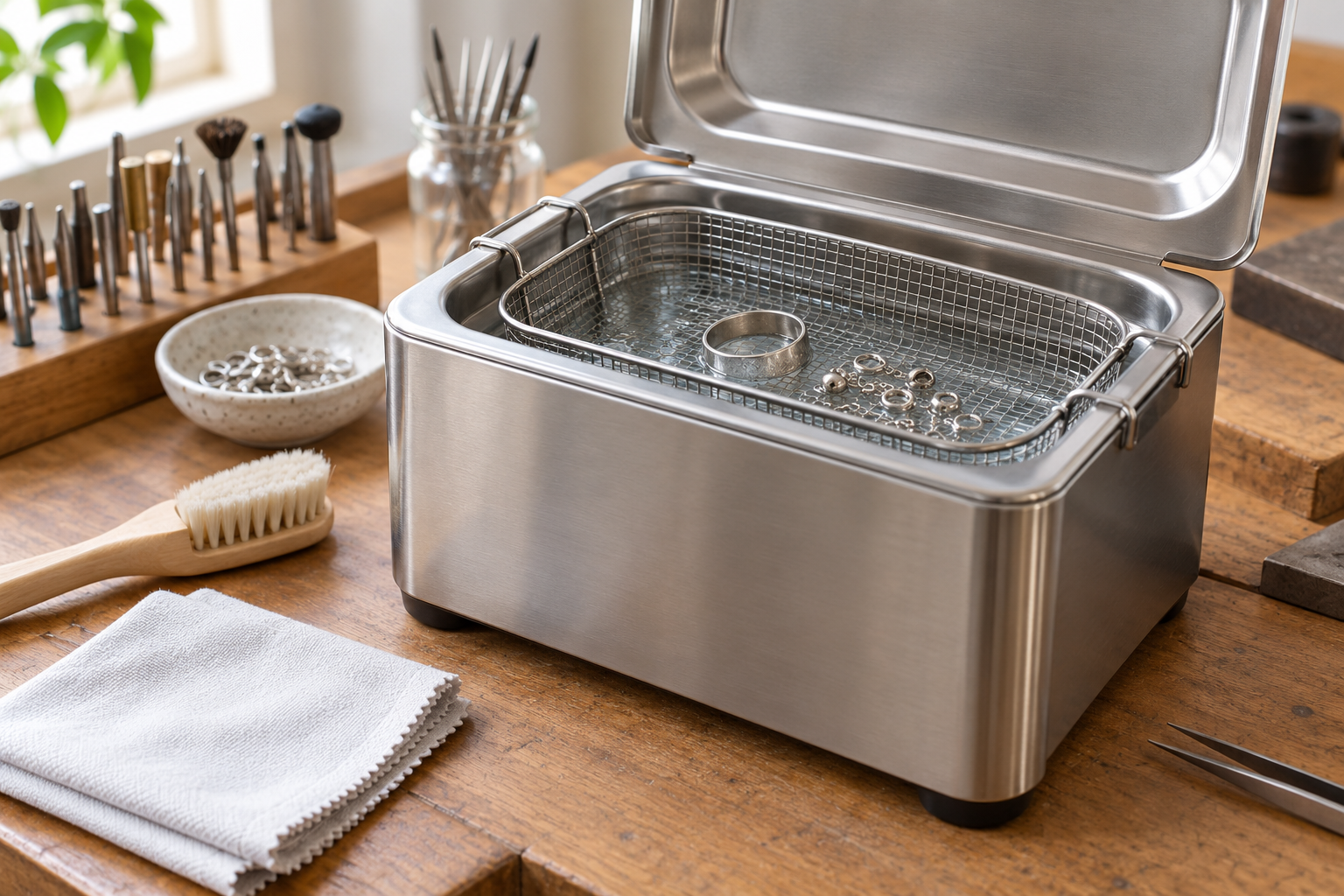
For chains and simple fabricated pieces, the small rotary barrel remains the most flexible first choice. Move to vibratory abrasion or magnetic pins when the surface or geometry of your work calls for that process. If your main task is removing residue rather than finishing metal, compare a jewelry ultrasonic cleaner instead.
Frequently asked questions
What type of tumbler should a beginner jeweler buy?
For general wet steel-shot burnishing of prepared silver, chain and findings, start with a small rubber-barrel rotary tumbler. Choose a vibratory bowl when light abrasive deburring is the main job, or a magnetic pin finisher when fine recesses are difficult to reach.
Can a jewelry tumbler remove deep scratches?
Steel-shot and magnetic-pin burnishing brighten a prepared surface but are poor substitutes for removing visible file marks or deep scratches. Do the necessary filing and sanding first. A compatible abrasive vibratory process can smooth light surface defects, but its media and cycle need to match the metal and desired finish.
Can I put steel shot in a Raytech TV-5?
No. Raytech's current TV-5 product instructions say not to use steel shot in that model. Use compatible abrasive or polishing media for its vibratory process, or choose a suitable rotary barrel for wet steel-shot burnishing.
Can I tumble jewelry with stones set?
Set stones can be chipped, loosened or damaged by media and repeated movement. Pearls, opal, turquoise and other soft, porous or treated materials are especially vulnerable. Finish the metal before setting when possible, and follow stone-specific guidance for unfamiliar pieces.
Tools in this guide
Lortone
Lortone 3A rotary tumbler
$$A home jeweler who wants a small, simple barrel for wet steel-shot burnishing.
We have not personally used every product in this guide. Recommendations are based on specifications, manufacturer documentation, specialist references and owner experiences.
Specifications come from manufacturer documentation where it is available.
Specialist references, supplier catalogs and owner experiences are used to understand real-world strengths and weaknesses.
We do not claim physical testing, and we do not publish scores or star ratings.
Set up a jewelry bench at home with the right bench height, bench pin position, lighting, seating, tool layout, metal recovery, soldering zone and safety.
Choose a rotary tumbler for jewelry by barrel size, batch separation and controls. Five researched picks cover a small bench through production burnishing.