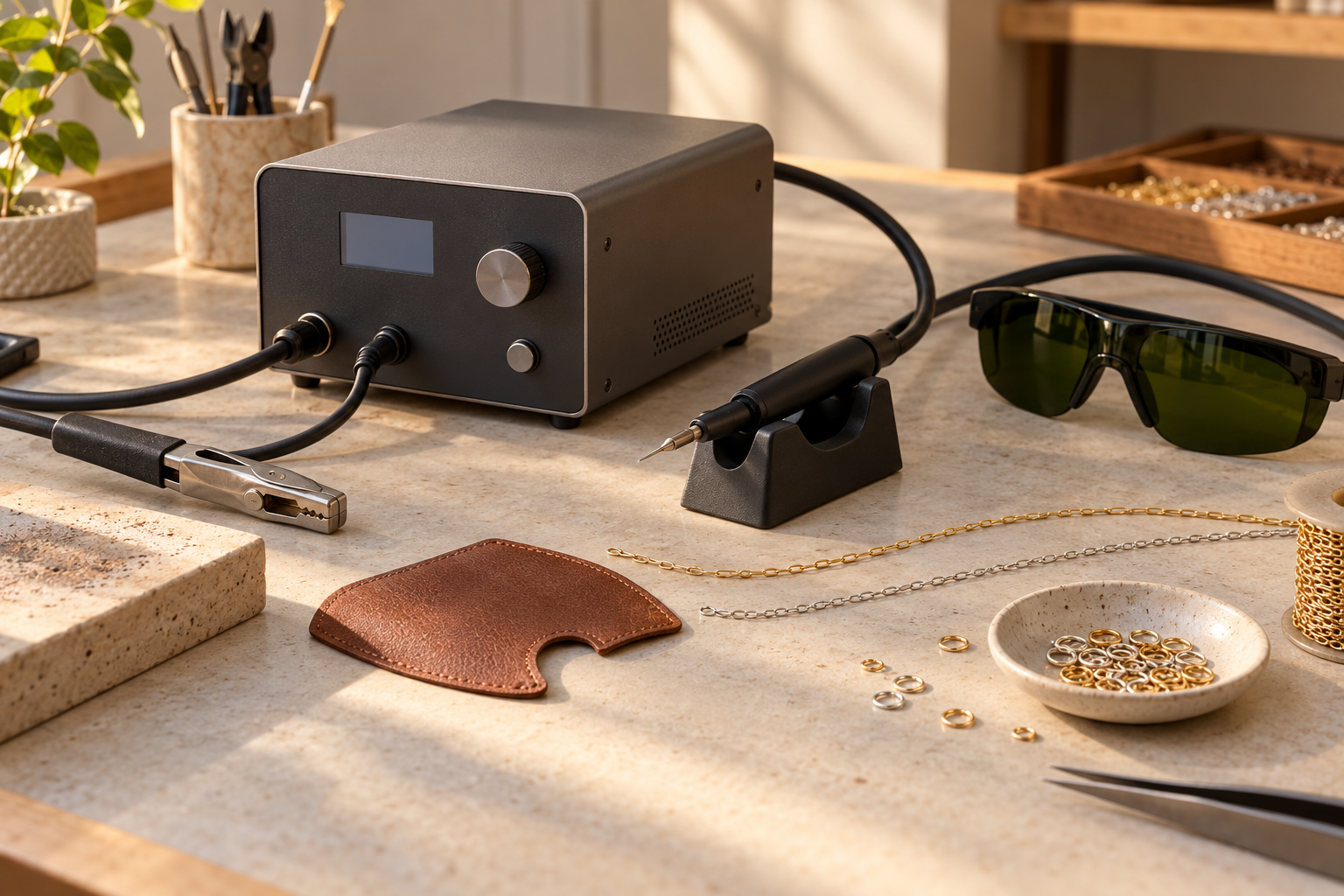
A permanent jewelry welder closes a small jump ring while a bracelet or anklet is being fitted. The key choice is how finely you can control a short weld on the chain you actually use, then whether the machine and its safety setup fit an event table or a fixed bench. These five pulse arc machines cover different starting budgets, controls and power arrangements.
Quick answer
Which permanent jewelry welder should I choose?
Start with the Sunstone Zapp if you work mainly with fine chain and want simple controls. The Pepetools Helix gives you a wider 1–30 J range at a moderate step up; the compact Zapp Plus 2 adds a lockable dial and removable long stylus. Choose the Orion mPulse when half-joule low-end adjustment and multiple ground ports matter, or the rechargeable EVERARC R Series when you work away from outlets.
Choose by chain, setting and work location
Do not buy by maximum joules alone. The Zapp’s 3–10 J range covers many fine jump rings, but it cannot step below 3 J for a particularly delicate connection or above 10 J for heavier work. The Helix and Zapp Plus 2 start at 1 J and reach 30 J in whole-joule steps. The mPulse adjusts in half-joule steps from 1–15 J, then whole joules to 30 J. The EVERARC R Series reaches lower still, from 0.5–20 J in half-joule steps. Those are control ranges, not universal settings for a metal: joint fit, chain gauge, electrode condition and shielding gas also affect the result. Practice on the same components you plan to use with clients.
Match the welder to the work you do most| Main need | Start with | Why it fits |
|---|
| First fine-chain appointments | Sunstone Zapp | Simple 3–10 J dial and low initial equipment cost |
|---|
| Full range with simple buttons | Pepetools Helix | 1–30 J, digital setting and 72-inch stylus reach |
|---|
| A compact mobile full-range unit | Sunstone Zapp Plus 2 | 1.9 lb body, lockable energy dial and removable stylus cord |
|---|
| Busy bench and fine low-end adjustment | Sunstone Orion mPulse | Half-joule low range, touchscreen and three grounding ports |
|---|
| Events without dependable outlets | Everlinx EVERARC R Series | Internal battery and half-joule adjustment from 0.5 J |
|---|
Five welders for distinct setups
Best first machine for fine chain: Sunstone Zapp
The Zapp keeps the choice to eight settings, 3 through 10 J. Its dial is easy to learn, and the machine includes a stylus, ground clip, three electrodes and shaded glasses. Sunstone documents argon compatibility, so shielding gas can be added as your workflow develops. The limitation is real: the Zapp cannot select the lower settings available on the other four machines, and its shorter stylus limits placement around a larger client table. Choose it when fine chain is the core service, then test your actual jump ring and chain before the first appointment.
Best for starting with fine chain
Sunstone · Zapp
Sunstone Zapp Permanent Jewelry Welder
A compact entry welder with eight whole-joule settings for fine chain and small jump rings. It includes a stylus, grounding clip and shaded glasses.
Best for: A first permanent jewelry setup focused on fine chain and simple controls.
Specs, strengths and limitations
- Energy range
- 3–10 J
- Energy adjustment
- 1 J
- Control
- Dial
- Power source
- AC adapter
- Argon
- Optional; compatible
Strengths
- Simple eight-setting control for learning on fine chain
- Small unit travels easily between appointments
- Three-year maker warranty and US support
Limitations
- Cannot select below 3 J or above 10 J
- Shorter stylus reach than the full-range options
- An auto-darkening lens is separate
The Helix moves from 1–30 J in whole-joule steps using a three-button control and digital readout. The 72-inch reach gives more freedom to place the machine away from the client chair. Its on-demand argon flow can be used with a compatible tank and regulator, while the maker says the machine also operates without gas. Shade 5 glasses, grounding clips, electrodes and a stylus stand are included. A darkening screen is a separate configuration, so account for it when planning how you and your client will view the weld.
Best full-range value
Pepetools · HELIX
A 1–30 J pulse arc machine with a three-button digital control, 72-inch stylus reach and on-demand argon flow.
Best for: Full energy range at a lower step-up cost than the touchscreen machines.
Specs, strengths and limitations
- Energy range
- 1–30 J
- Energy adjustment
- 1 J
- Control
- Three-button digital display
- Power source
- 110/220 V AC adapter
- Stylus reach
- 72 in
Strengths
- Full 1–30 J range suits fine and heavier jump rings
- Buttons help prevent an accidental setting change
- Long stylus reach works around a client chair
Limitations
- Only whole-joule adjustment
- Auto-darkening screen costs extra
- External power is required
Best compact dial-controlled step up: Sunstone Zapp Plus 2
The Zapp Plus 2 also spans 1–30 J, but uses a digital energy dial that can be locked against accidental movement. Its 1.9 lb body and detachable 72-inch stylus cord suit a compact event kit. The 318111 configuration includes the welder, power supply, stylus, electrodes, ground clips, argon tubing and shaded glasses. Auto-darkening optics are an additional choice. Compared with the Helix, pay more for the smaller unit and dial layout; compared with the mPulse, accept whole-joule adjustment.
Best compact mobile setup
Sunstone · 318111
A compact dial-controlled pulse arc welder with a digital energy display, removable 72-inch stylus and 1–30 J range.
Best for: Mobile work that needs a full energy range in a small unit.
Specs, strengths and limitations
- Energy range
- 1–30 J
- Energy adjustment
- 1 J
- Control
- Lockable digital energy dial
- Power source
- AC adapter
- Stylus reach
- 72 in removable cord
Strengths
- Full energy range in a 1.9 lb machine
- Lockable dial reduces accidental changes
- Removable 72-inch stylus reaches around an event table
Limitations
- Whole-joule steps provide less fine control than the mPulse
- Auto-darkening optics are separate
- Costs more than the Helix
Best for frequent appointments: Sunstone Orion mPulse
The current Orion mPulse provides a touchscreen and 1–30 J range, with half-joule increments from 1–15 J. That finer low-end adjustment is useful when moving among fine chains and jump rings during a busy day. Three ground ports and front-facing connections give options for cable routing on a crowded table; the machine can stand horizontally or vertically. It is a costly upgrade over the dial and button machines. Check the exact optical package because the supplied eye protection and any auto-darkening option vary by configuration.
Best for frequent appointments
Sunstone · Orion mPulse
Sunstone Orion mPulse Permanent Jewelry Welder
A touchscreen pulse arc machine with 0.5 J steps at the lower end of its 1–30 J range, three grounding ports and a 72-inch stylus.
Best for: A busy appointment bench that benefits from finer low-energy control and flexible cable placement.
Specs, strengths and limitations
- Energy range
- 1–30 J
- Energy adjustment
- 0.5 J from 1–15 J; 1 J above 15 J
- Control
- Digital touchscreen
- Power source
- AC; built-in power supply
- Stylus reach
- 72 in
Strengths
- Half-joule steps through the fine-chain range
- Three grounding ports simplify work from different sides of the table
- Touchscreen shows the selected setting clearly
Limitations
- Costs substantially more than the dial and button models
- Requires mains power
- Auto-darkening optics depend on configuration
Best away from outlets: Everlinx EVERARC R Series
The rechargeable EVERARC R Series removes the mains cord from the event table. Everlinx specifies a 0.5–20 J range in half-joule steps, a 65-inch stylus and up to roughly 1,500 consecutive welds per charge under its stated continuous-use condition; actual endurance depends on use. The maker designs this model to work without an argon tank. Its 20 J ceiling is lower than the Helix, Zapp Plus 2 and mPulse, so heavier work may call for another machine. Plan suitable eye protection separately, and charge and practice before leaving for an event.
Best for outlet-free events
Everlinx · EVERARC R Series
Everlinx EVERARC R Series Rechargeable Welder
A rechargeable permanent jewelry welder with 0.5–20 J output in half-joule steps and a 65-inch stylus.
Best for: Pop-up work where an outlet or extension cord is impractical.
Specs, strengths and limitations
- Energy range
- 0.5–20 J
- Energy adjustment
- 0.5 J
- Control
- Digital buttons
- Power source
- Internal rechargeable battery
- Stylus reach
- 65 in
Strengths
- Internal battery removes the need for an outlet at an event
- Half-joule steps reach down to 0.5 J
- No gas cylinder is required for the maker's setup
Limitations
- 20 J ceiling is lower than the 30 J machines
- Run time depends on charge and work pattern
- Eye protection must be added to the setup
Pulse arc, laser and shielding gas
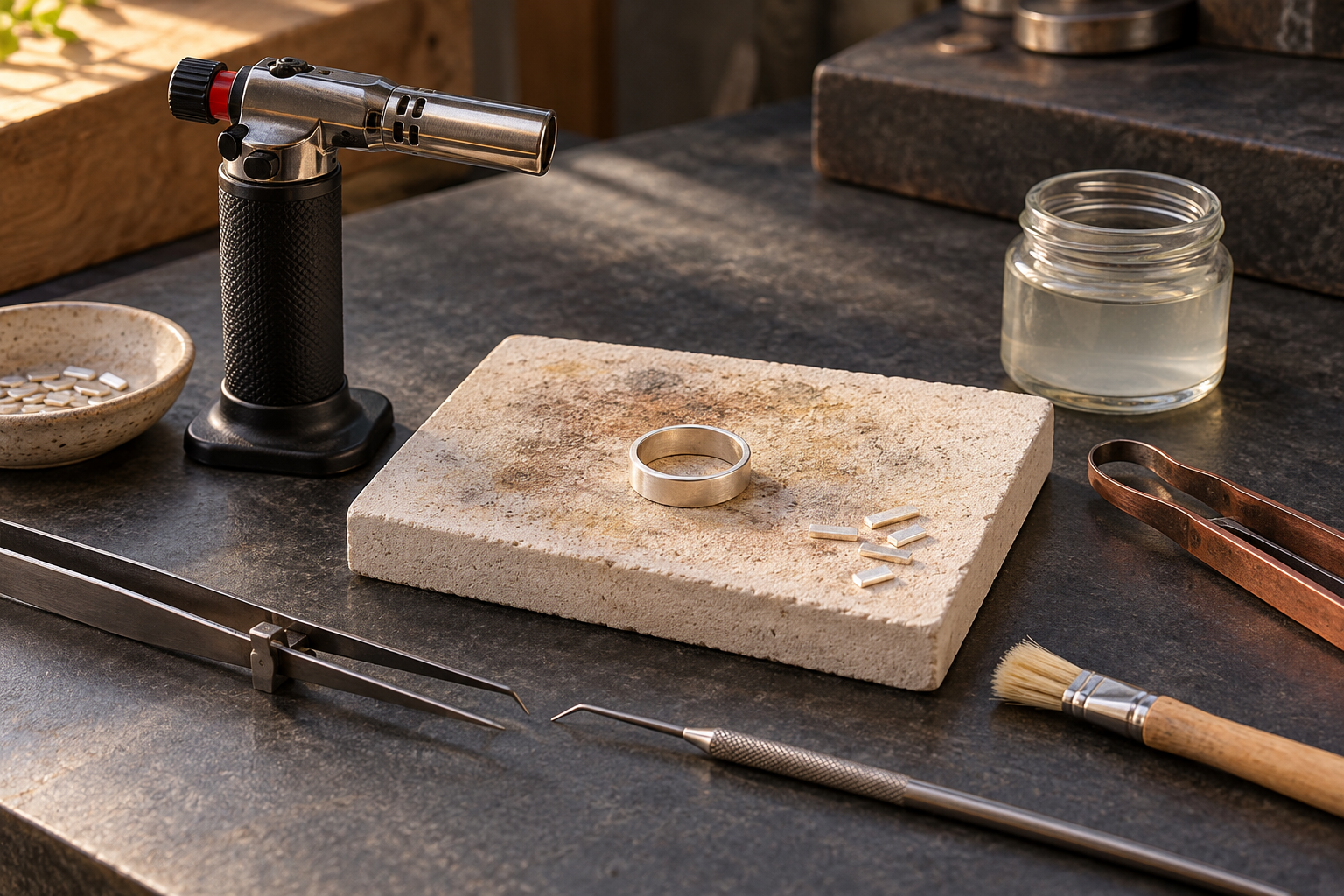
Each recommendation above is a pulse arc machine: it grounds the metal and triggers a short electrical arc at a tungsten electrode. A laser directs light onto the joint and has different optical and workholding requirements. The Sunstone welding FAQ explains that difference. A laser may make sense for off-body bench repairs, but for closing a link near a client’s skin, select equipment and training designed around that appointment workflow.
Argon shields the molten metal from air, which can reduce oxidation and help arc stability. Sunstone explains the gas’s role while noting that its pulse arc machines can work without it. The Helix likewise accepts optional argon. Everlinx designs the R Series as a gas-free setup. If you add a tank, budget space for the correct regulator, tubing and secure transport, and follow the maker’s gas instructions.
Build the safety setup before the first client
Eye and skin protection are part of the work, not optional finishing touches. Use the welder maker’s specified welding-rated glasses or auto-darkening optics for everyone who could view the arc. Put a leather barrier between the jump ring and the client’s skin, keep the joint away from loose hair and flammable material, and use the proper ground clip on the metal. Sunstone’s permanent jewelry safety guidance calls for these safeguards and for practice before serving clients.
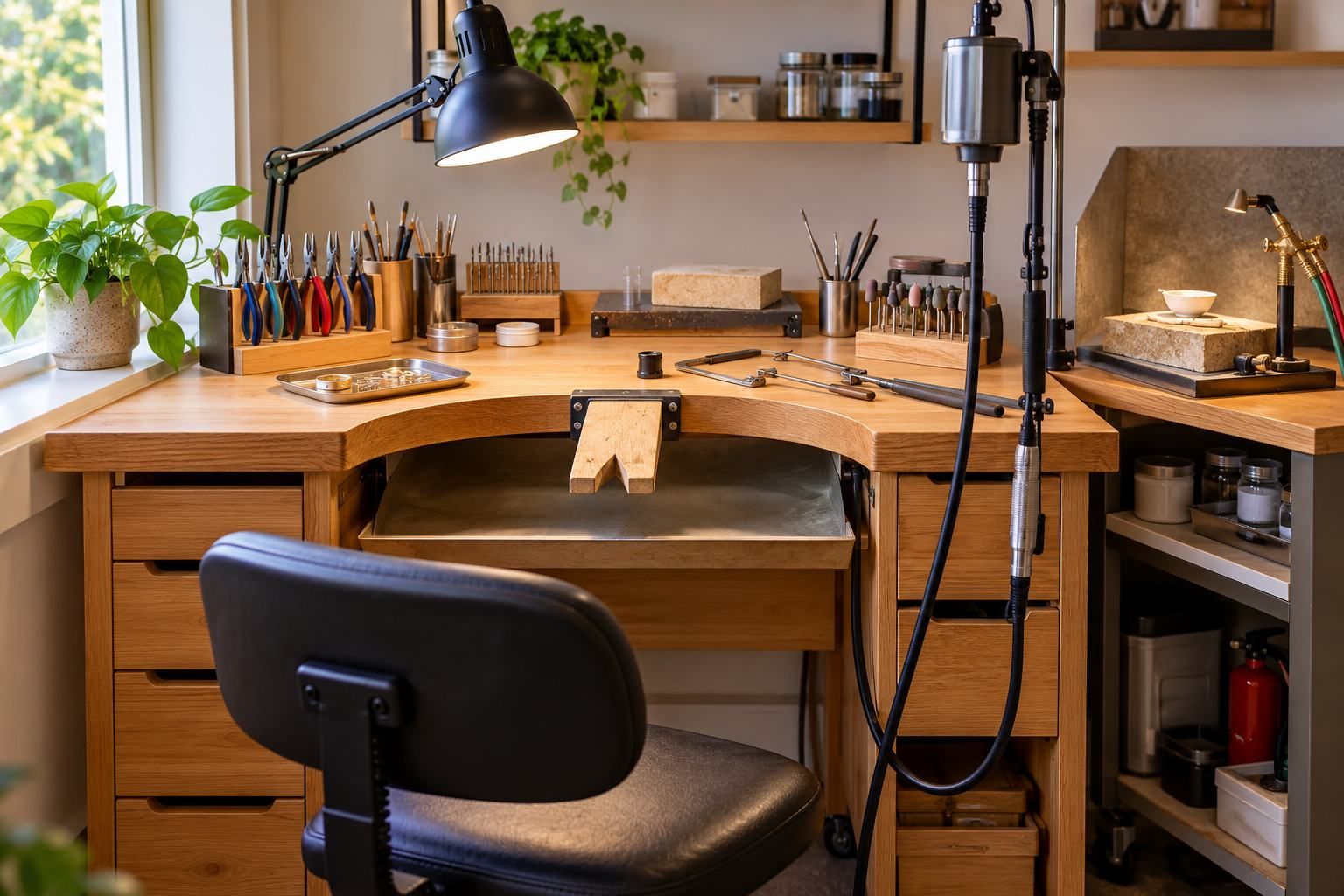
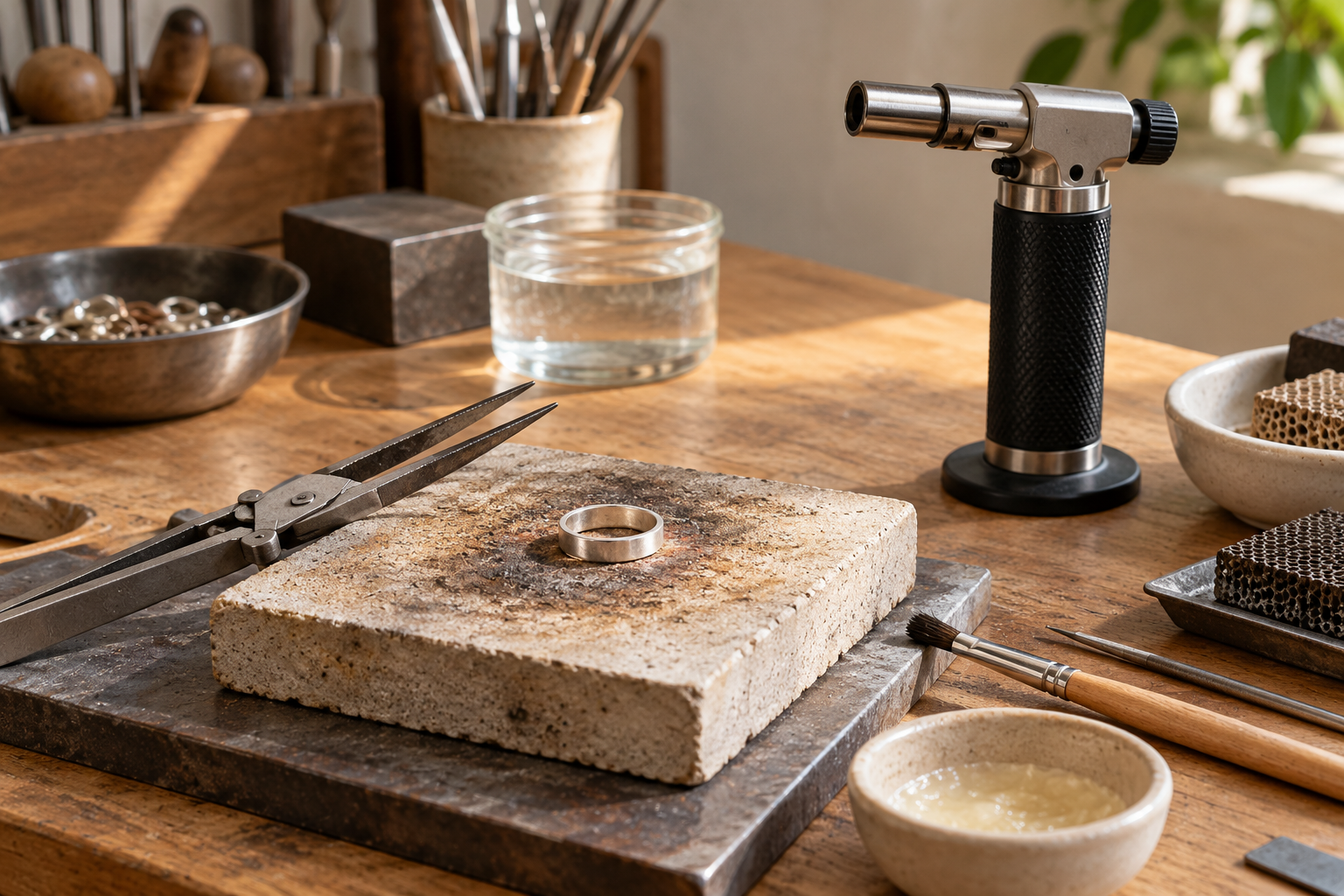
Set up a stable surface with enough room for chain, pliers, a sharp electrode and a clean ground connection. The jewelry bench setup guide helps with tool placement and lighting. A pulse arc machine closes a prepared link; it does not replace a jewelry torch for conventional soldering or heating a larger workpiece.
Check the configuration before ordering
- Model and controls: Confirm the exact machine version, its lowest setting, adjustment steps and included stylus length.
- Protection: Check whether welding-rated glasses, a client shield or auto-darkening optics, and a leather skin barrier are included.
- Gas and power: Check the tank and regulator requirements, outlet or charging needs, and safe transport arrangements for your country.
- Service: Check electrode size, replacement stylus and ground parts, warranty terms, shipping and local support.