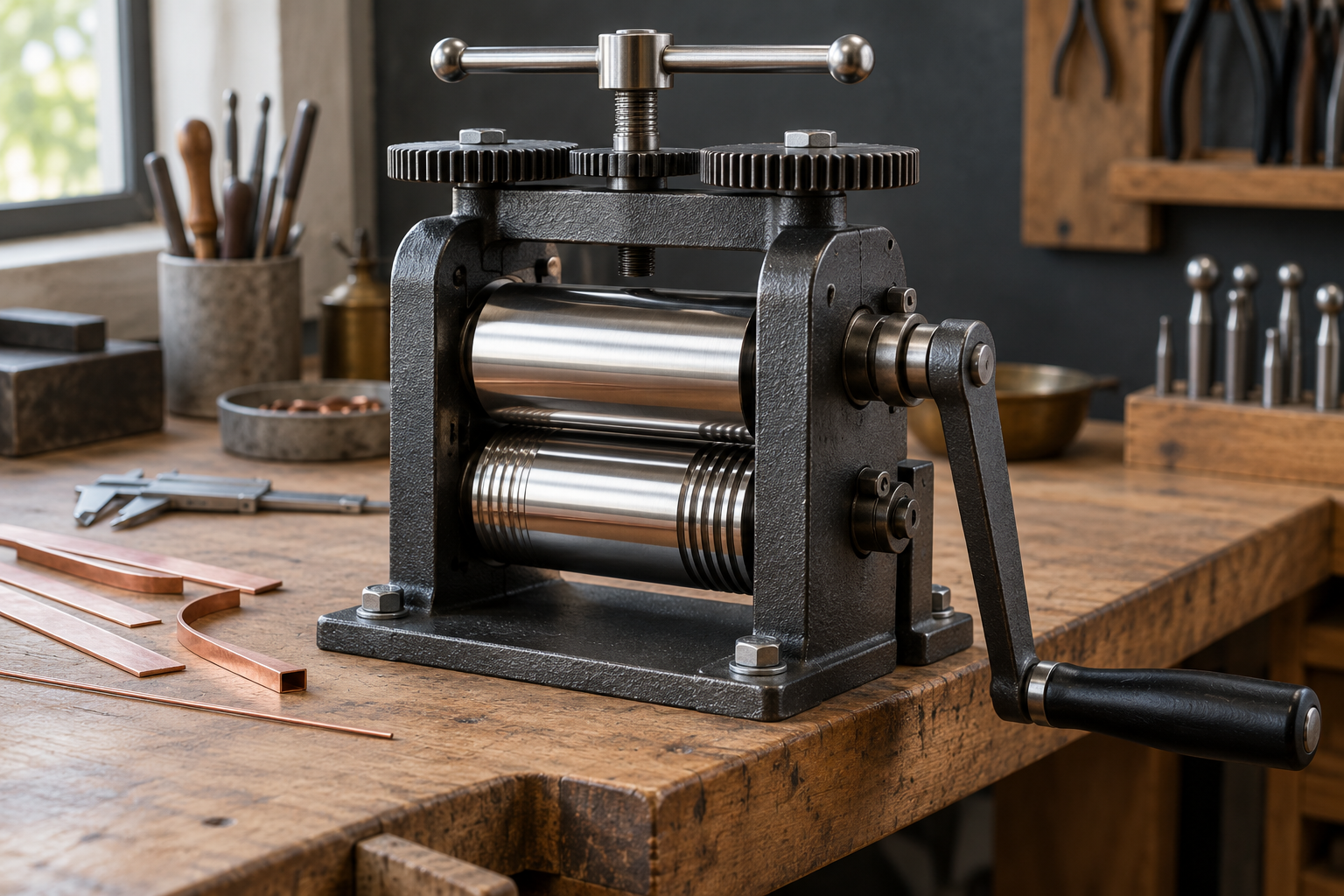
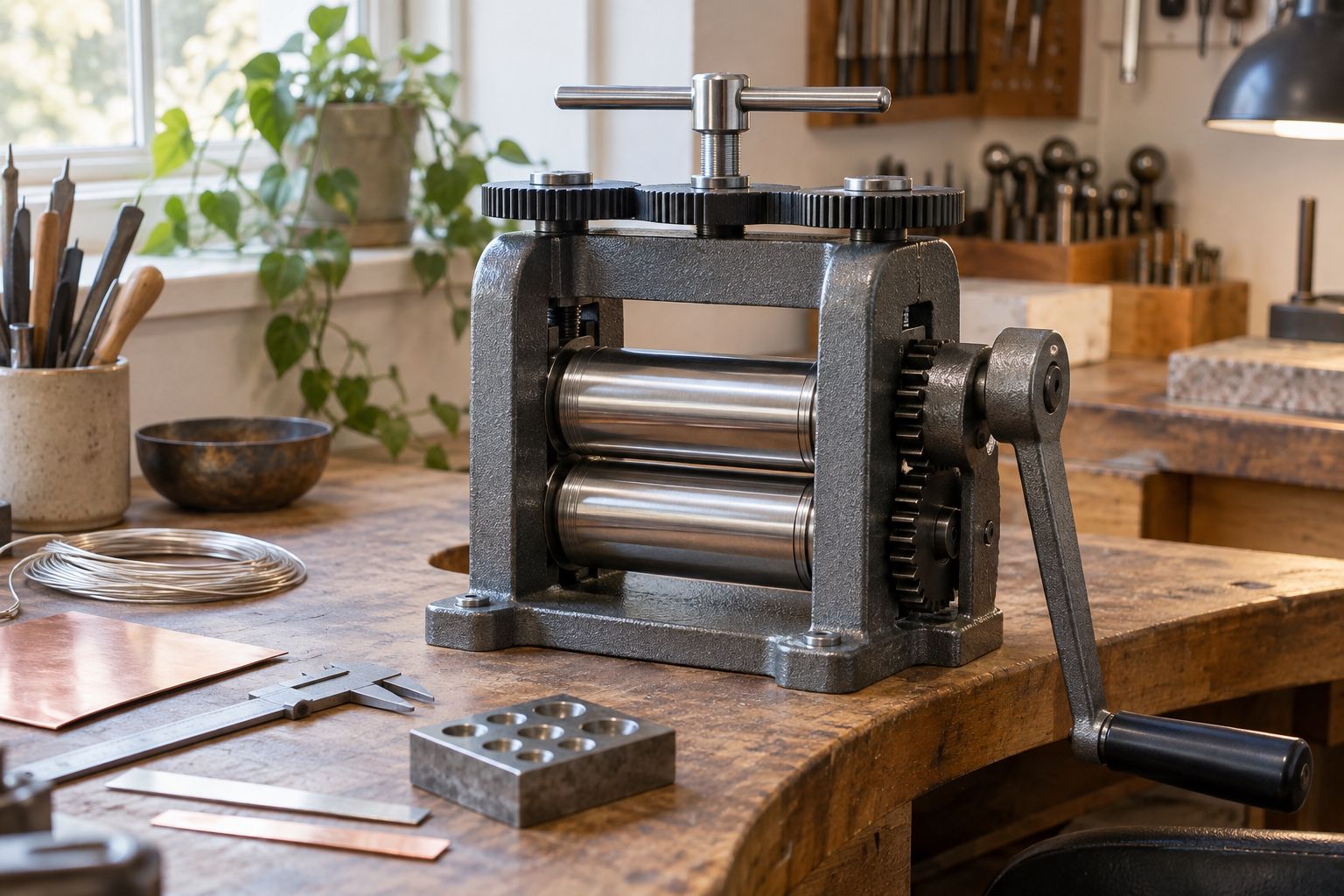
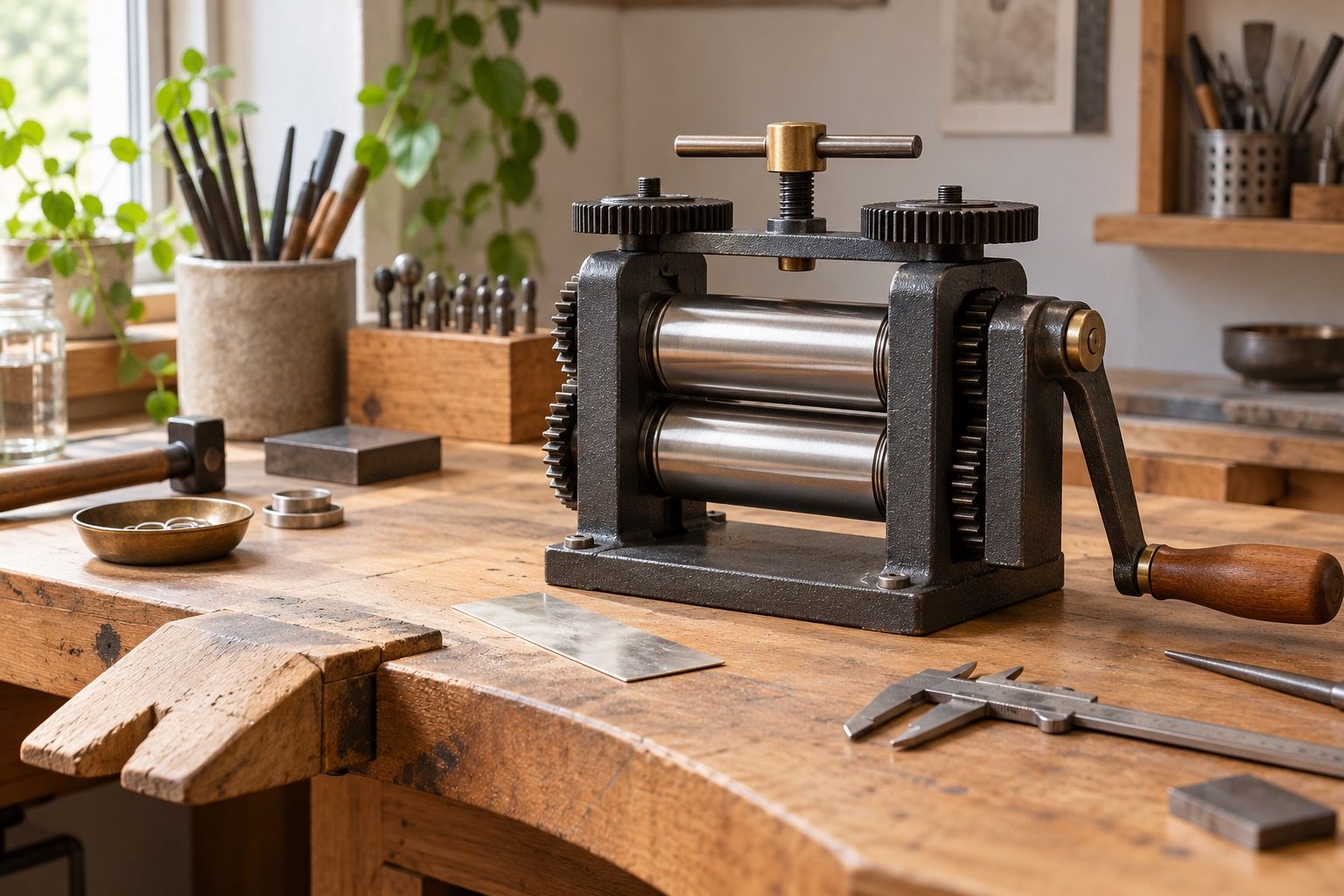
A compact combination mill needs a rigid mounting surface and clean, parallel rollers before it earns a place on a jewelry bench.
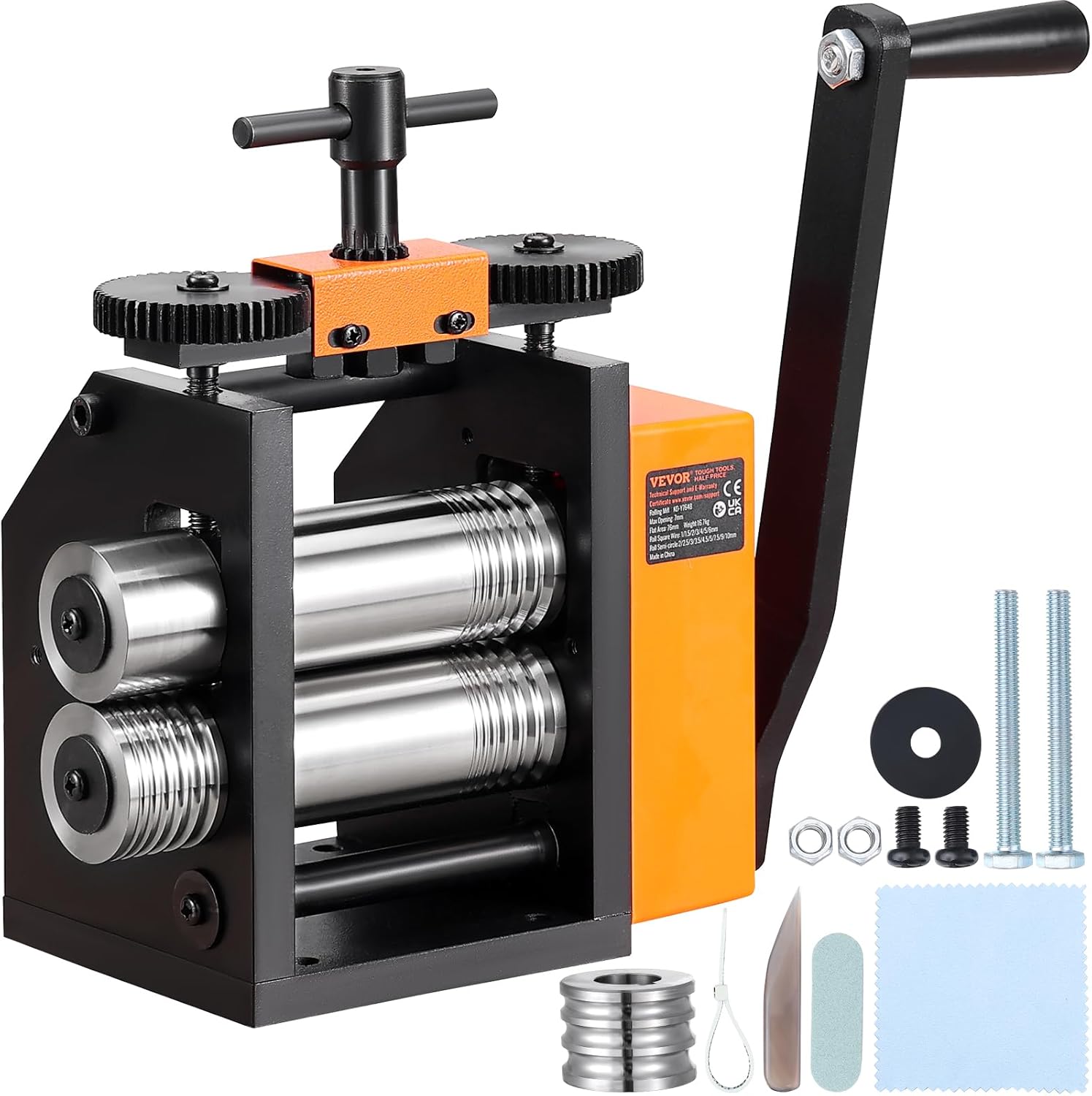
The VEVOR KD-Y7648 is a compact, manual combination rolling mill aimed at jewelers who need to reduce small sheet and make square or half-round wire without buying a larger specialist machine. Its appeal is straightforward: a 76 mm working width, separate wire profiles and 1:2 reduction gearing in one bench-mounted tool.
The important qualification is that it is a budget precision tool, not a fit-and-forget upgrade. Treat the initial inspection and mounting process as part of the purchase. If the roller faces are clean, the gap closes parallel and the base is rigidly bolted down, it can make a useful first mill for small work. If you regularly roll wide sheet, rely on tight tolerances, or want a tool to carry production work for years, save for a wider flat mill with stronger documented support.
Quick answer
Is the VEVOR 76 mm rolling mill worth considering?
Yes, for a jeweler who needs a compact combination mill for small sheet, square wire and half-round wire and is prepared to inspect and mount it carefully. The KD-Y7648’s 76 mm width, 0.1–7 mm adjustable opening and 1:2 reduction gearing give it genuine beginner utility. Its limits are the narrow flat area, modest mechanical advantage and the need to check roller condition before valuable metal goes through it.
What this exact mill is
VEVOR sells more than one rolling-mill width and configuration. This review is about the KD-Y7648, the 76 mm, three-in-one combination version. Its published specification lists a 76 mm flat section, a 0.1–7 mm adjustable opening, seven square-wire groove sizes, nine half-round groove sizes and 1:2 reduction gearing.
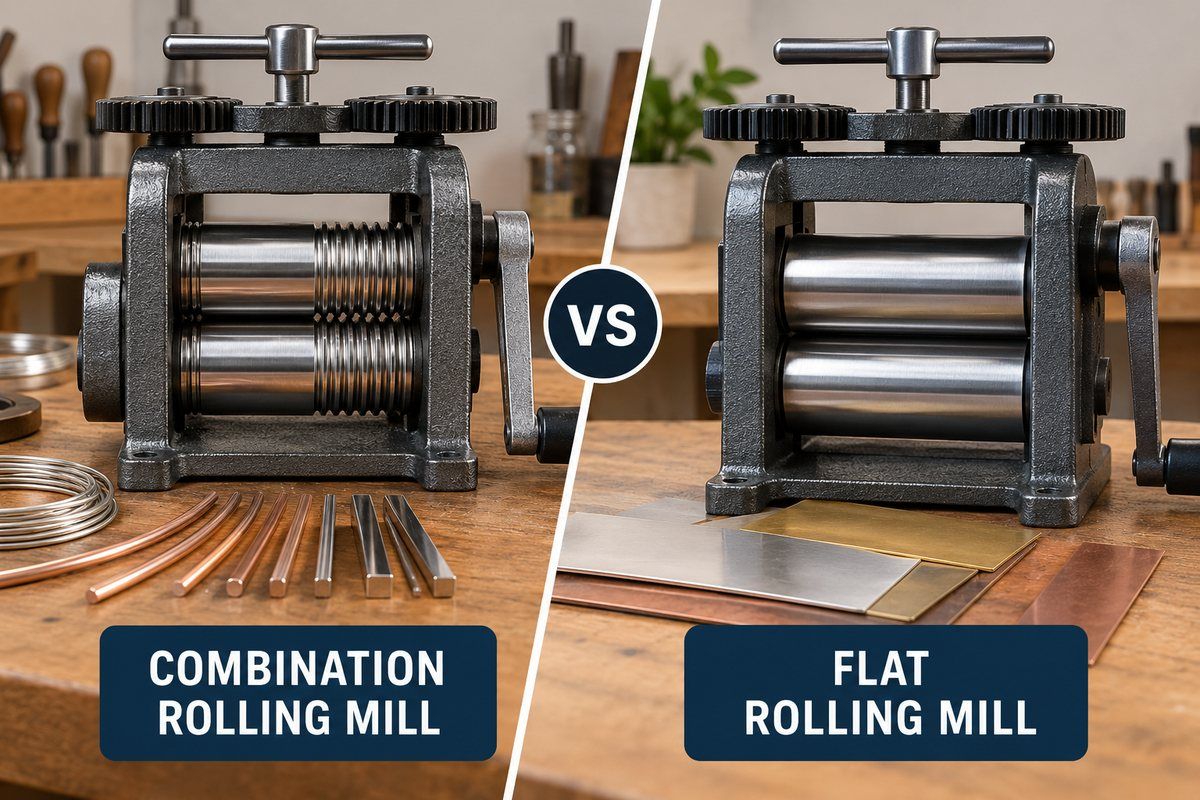
That combination layout is the point. A dedicated flat mill gives more usable sheet width for a given overall roller size; the VEVOR reserves roller space for wire grooves. In return, it gives a beginner or occasional maker several stock forms from one compact machine.
Where the VEVOR KD-Y7648 fits
Your work
Fit
Why
Rings, small components and narrow sheet
Good fit
The 76 mm format is compact and the flat section handles modest stock reduction.
Square or half-round wire experiments
Good fit
The dedicated groove sets add capability that a flat-only mill does not provide.
Wide cuffs or large texture plates
Poor fit
Combination grooves consume roller width; a wider dedicated flat mill gives more useful sheet capacity.
Frequent production work with expensive metal
Consider a step-up
Roller finish, alignment, support and long-term consistency become more valuable as use increases.
The useful parts of the design
Combination rollers cover several early projects
The KD-Y7648 combines flat, square-wire and half-round rolling sections. That matters when you are still learning which stock forms your work uses most. You can reduce a narrow annealed strip, make a small square section, or work a half-round profile without changing machines.
The trade-off is capacity. Do not read 76 mm as 76 mm of unrestricted flat-sheet workspace on every job. Measure your widest blank or texture material, leave room for controlled feed, and choose a dedicated flat mill when wider sheet is the clear priority. Our combination vs. flat rolling mill guide explains that split in more detail.
The 1:2 reduction gear is helpful, not effortless
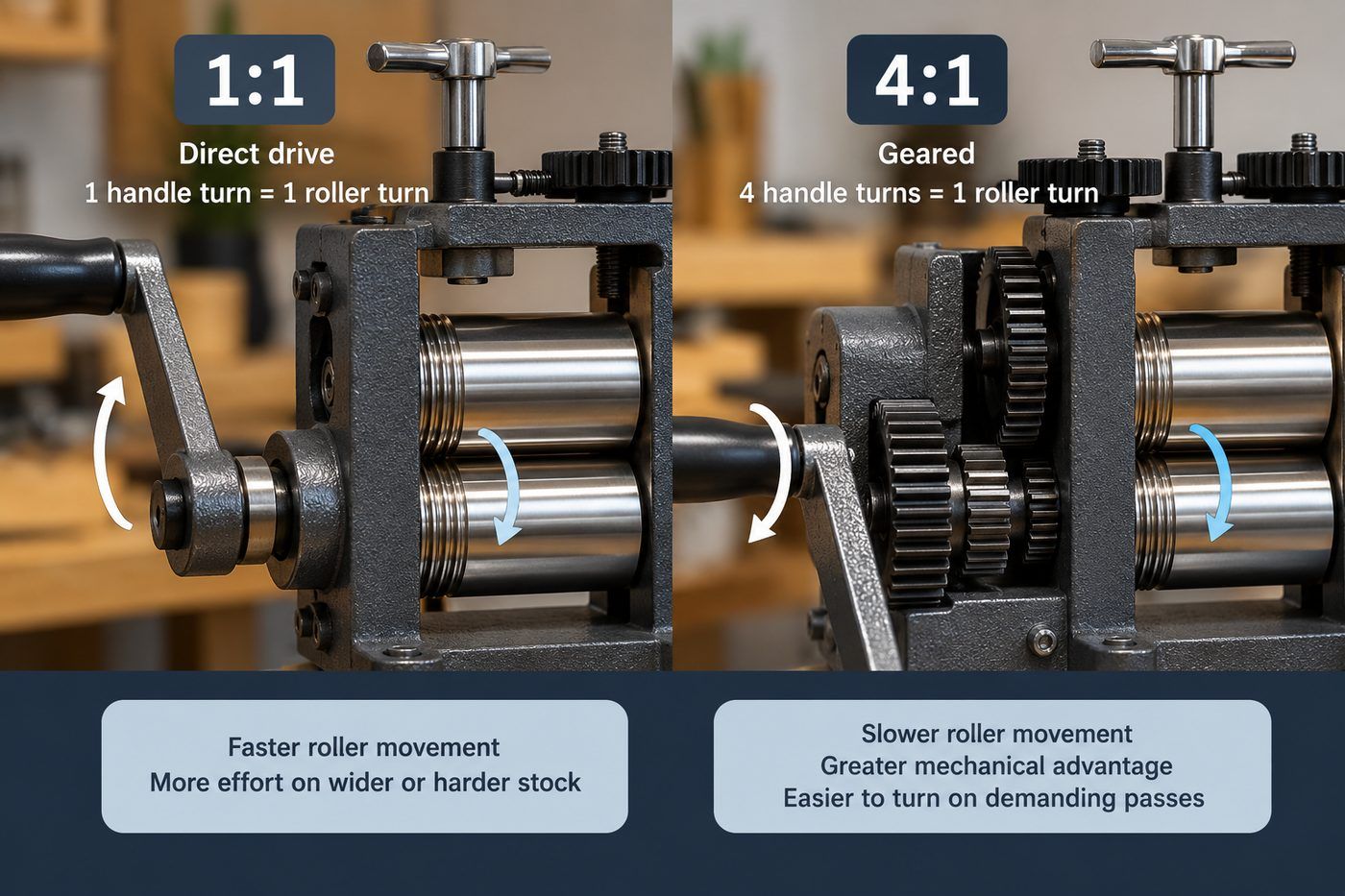
The 1:2 reduction means the handle turns about twice for one roller rotation. That gives more leverage than direct drive, but it asks more of the operator than a 4:1 or 5:1 machine. For narrow, annealed stock and gradual reductions, that is a reasonable compromise in a compact mill. It is not a reason to force a hard pass.
Anneal metal as it work-hardens, reduce the gap in small steps and stop if the crank effort rises unexpectedly. The gears help you apply force; they do not make hardened stock, a dirty roller or a misadjusted gap safe to roll. See how rolling-mill gear ratios work before treating gearing as a shortcut.
The adjustment range is practical for small stock
VEVOR specifies a 0.1–7 mm roller-gap range, adjusted with the top T-bar. That upper opening helps when starting with a small ingot or thicker non-ferrous stock, while the lower end supports gradual reduction. It does not promise a particular finished gauge: alloy, annealing, starting thickness and the accuracy of your adjustments all affect the result.
Before the first pass, set the gap only a little wider than the annealed stock, feed the piece squarely and reduce the gap in modest increments. The manual identifies the upper roller as the moving roller, so consistency depends on letting the T-bar settle the gap evenly before each pass.
Choose the KD-Y7648 when you need a compact tool for small sheet plus square and half-round wire. Its 76 mm format and 1:2 reduction make more sense for learning and occasional bench work than for wide sheet or demanding production. Confirm the model number, mounting hardware and included accessories before ordering.
Best for: Budget-conscious beginners making rings and small components who can work within a 76 mm sheet width.
Specs, strengths and limitations
Roller width
76 mm
Flat rolling area
76 mm flat roller
Wire grooves
7 square sizes; 9 half-round sizes
Gear ratio
2:1 reduction
Maximum opening
7 mm
Strengths
Flat, square-wire and half-round capability in a compact footprint
0.1–7 mm adjustable opening handles thicker ingots than the other compact mills here
Lower entry price than the geared specialist mills in this guide
Limitations
76 mm width limits wider sheet and texture work
2:1 gearing provides less leverage than a 4:1 or 5:1 mill
Inspect roller finish and alignment immediately after delivery
The owner’s manual calls for a stable, level workbench and mounting bolts. That is not a minor accessory step. Cranking puts sideways and turning force into the base; a tool that shifts, twists or sits on a flexing surface cannot roll consistently.
Plan these details before drilling:
Mounting position. Leave room for the full crank sweep and for stock entering and leaving the rollers.
Bench stiffness. Bolt through a rigid top or a purpose-built stand. A light table can move even when the fasteners are tight.
Roller inspection. Use side light to look for rust, pits, nicks or scratches on every working face. Close the rollers carefully and check that the contact looks even.
First material. Clean off protective oil according to the manual, then use annealed scrap copper for light test passes. Inspect both the sheet and the roller surfaces after each pass.
Routine care. Remove metal dust after use, keep exposed metal dry and lubricate the moving parts as the manual directs. Grit or corrosion can permanently mark a roller and the material that follows it.
What to watch before you buy
This is where a budget mill needs a more deliberate decision than a catalog specification suggests.
Roller finish and alignment
A smooth, parallel roller surface matters more than a long feature list. Anything on the roller face can transfer to your sheet. A gap that is wider at one end can reduce stock unevenly, make it curve or leave you chasing thickness differences across a strip.
Check the roller faces before loading silver or gold. Then make comparable scrap passes near both sides of the working area. You are not looking for laboratory measurements; you are looking for an obvious difference that warrants stopping before valuable metal is involved.
Flat width versus overall width
The VEVOR is a combination mill, so its strength is flexibility—not maximum flat area. If your actual work is wider sheet, cuffs or regular texture rolling, buy the flat capacity first. A 90 mm dedicated flat mill can offer more useful flat space than a wider combination roller because wire grooves do not occupy it.
Our rolling-mill size guide walks through how to translate your planned stock sizes into a realistic machine width.
A low entry cost can still be the right answer
The KD-Y7648 makes sense when rolling is an emerging part of your work and you need its combination layout now. It makes less sense if you already know you will roll wide sheet frequently, need the smoother feel of deeper reduction gearing, or want established parts and service to be central to the ownership decision.
For that next decision, compare the tool with a wider specialist model rather than simply another low-cost combination mill. Our VEVOR vs. Durston comparison outlines what changes when configuration, construction and support become more important than the initial purchase price.
Verdict
The VEVOR KD-Y7648 is a credible first rolling mill for small-scale jewelry work—not because it is universal, but because its combination layout gives a beginner useful options in a compact size. The 76 mm working width, wire grooves, 0.1–7 mm opening and 1:2 reduction gearing are enough for learning controlled sheet reduction and basic wire profiles.
Buy it with the expectation that you will mount, inspect and test it before it sees precious metal. Pass on it if wide sheet, repeatability under frequent use or established parts support is the real requirement. In that case, waiting for the right flat mill is more economical than adapting a compact combination machine to work it was never designed to do.
Frequently asked questions
Is the VEVOR 76 mm rolling mill good for a beginner?
It can be a sensible first mill for a beginner making narrow sheet, square wire and half-round wire, provided the mill arrives with clean parallel rollers and is bolted rigidly to the bench. It is not a substitute for a wider flat mill or a long-term production machine.
What can the KD-Y7648 roll?
The manufacturer specifies flat stock, seven square-wire groove sizes and nine half-round groove sizes. Work with annealed non-ferrous jewelry metals, make gradual reductions and do not force hardened or dirty stock through the rollers.
Does the VEVOR 76 mm mill need to be bolted down?
Yes. The manufacturer’s instructions call for a stable, level bench and supplied mounting bolts. Plan clearance for the crank sweep and for feeding stock before drilling the mounting holes.
What should I inspect before rolling silver?
Inspect the roller faces under side light for rust, pits and scratches; check that the rolls close evenly; clean protective oil as directed; then make light passes with annealed scrap copper before rolling valuable metal.
We have not personally used every product in this guide. Recommendations are based on specifications, manufacturer documentation, specialist references and owner experiences.
Specifications come from manufacturer documentation where it is available.
Specialist references, supplier catalogs and owner experiences are used to understand real-world strengths and weaknesses.
We do not claim physical testing, and we do not publish scores or star ratings.
Choose the right jewelry rolling mill by roller width, configuration, gearing and bench space, with a research-based look at budget and professional options.
Combination vs flat rolling mills compared for jewelry making — including usable sheet width, wire grooves, versatility and which type is better for your bench.
Learn what 1:1, 2:1 and 4:1 rolling mill gear ratios mean, how reduction gearing changes torque and handle effort, and whether a geared rolling mill is worth it.
How to choose rolling mill size for jewelry making — usable flat width vs roller width, 80 vs 110 vs 130 mm mills, cuffs, texture plates and bench space.